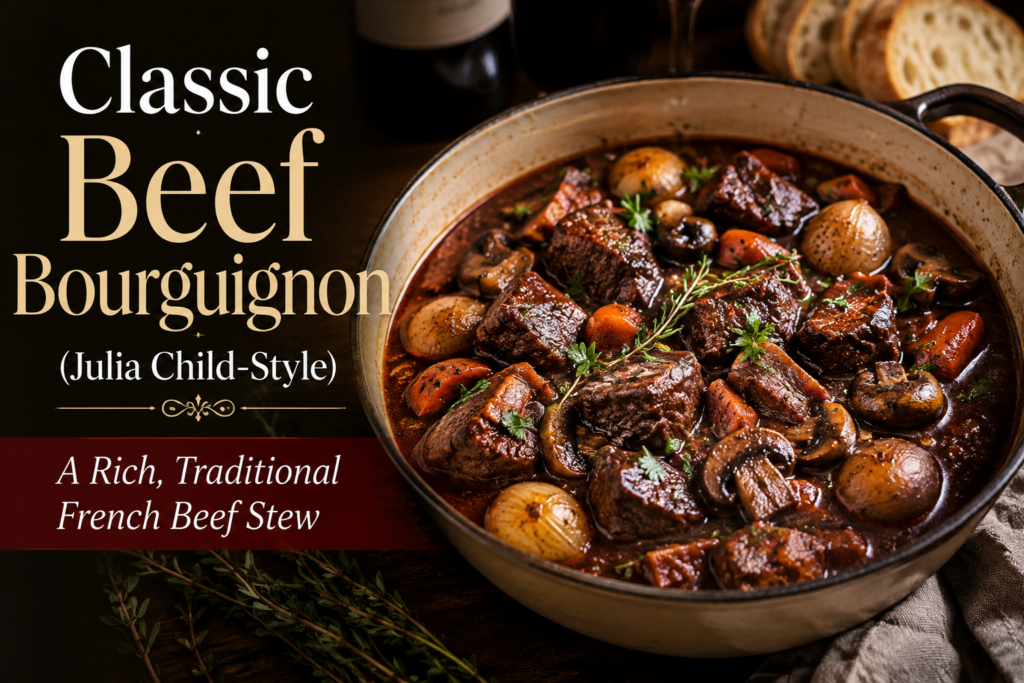
Classic Beef Bourguignon is one of the most celebrated dishes in French cuisine: tender beef slowly braised in red wine with onions, carrots, mushrooms, herbs, and aromatic vegetables until the meat becomes exceptionally soft and the sauce turns deep, glossy, and intensely flavorful. Inspired by the traditional French preparation popularized for American home cooks by Julia Child, this version focuses on careful browning, gradual braising, and a properly reduced sauce.
The beauty of Beef Bourguignon is that it rewards patience. It is not a dish that depends on complicated equipment or rare ingredients. Instead, its remarkable flavor comes from a series of simple cooking techniques performed correctly: searing the beef in batches, developing a flavorful base with vegetables, deglazing with red wine, and allowing the stew to cook slowly until the beef is fork-tender.
Although the dish is often associated with Burgundy, France, it has become a beloved comfort food around the world. Served with mashed potatoes, buttered noodles, crusty French bread, or simple boiled potatoes, a well-made beef bourguignon transforms an ordinary dinner into a memorable meal.
Table of Contents
What Is Beef Bourguignon?
Beef Bourguignon, also called Boeuf Bourguignon, is a classic French beef stew traditionally made by braising beef in red wine. The name refers to Burgundy, a French region historically associated with the dish and with the red wines used in its preparation.
Traditional versions commonly include beef, red wine, onions, carrots, mushrooms, herbs, and sometimes bacon or lardons. The ingredients are cooked slowly so the collagen in tougher cuts of beef breaks down, producing exceptionally tender meat and a naturally rich sauce.
The finished dish should not taste like ordinary beef stew. Properly prepared, it has layers of flavor: deeply browned beef, sweet and savory onions, earthy mushrooms, aromatic herbs, concentrated wine, and a silky sauce that clings to every piece of meat.
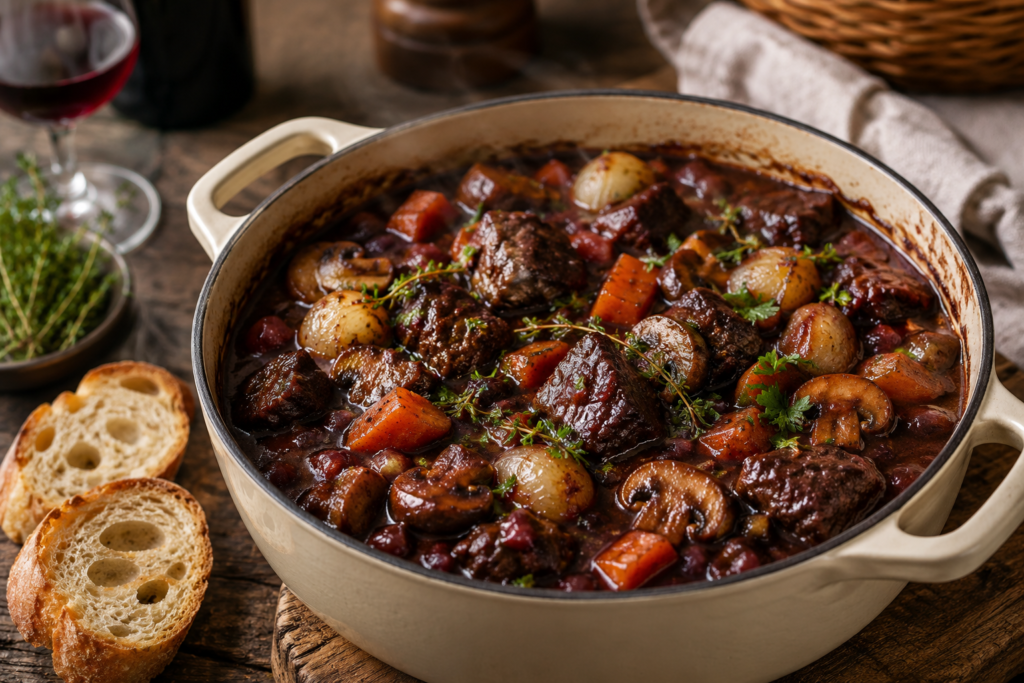
Best Beef Cuts for Classic Beef Bourguignon
Choosing the right beef is one of the most important steps. We want a cut that contains enough connective tissue and fat to remain juicy during a long cooking process.
The best options include:
- Beef chuck roast
- Chuck shoulder
- Boneless beef brisket
- Beef short rib meat
Chuck roast is particularly dependable because it develops a rich, tender texture after slow cooking. We should avoid very lean cuts because they can become dry and stringy during prolonged braising.
Cut the beef into approximately 2-inch cubes. Pieces that are too small may become dry, while very large pieces can take considerably longer to become tender.
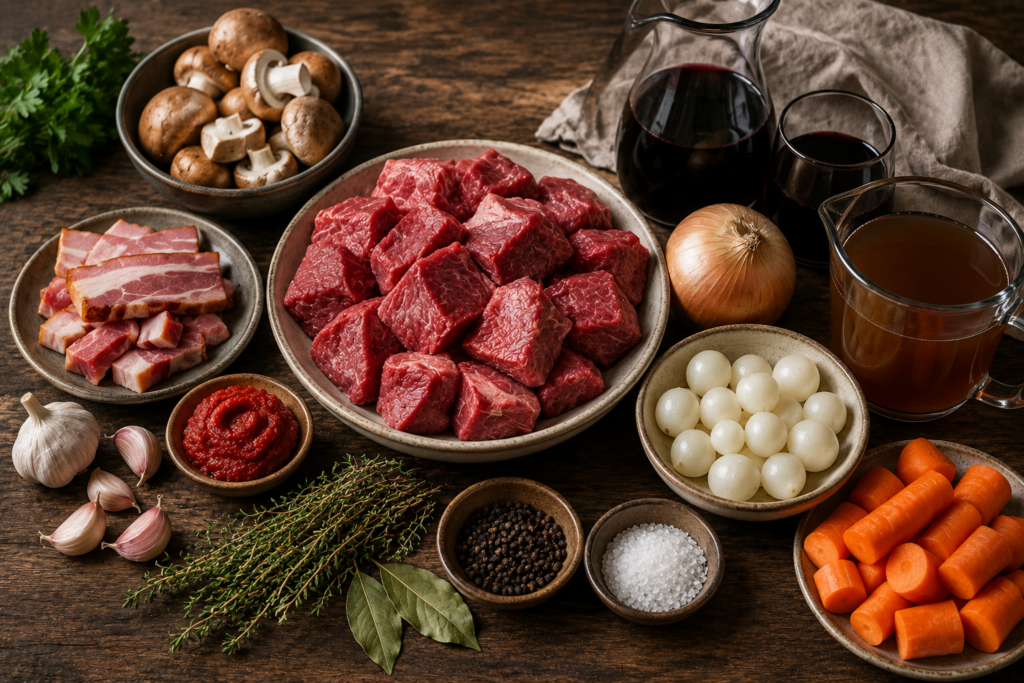
Ingredients
Method
- Prepare and Dry the Beef
- Render the Bacon
- Brown the Beef in Batches
- Cook the Vegetables
- Add the Flour
- Deglaze with Red Wine
- Add Beef Stock and Herbs
- Slow-Braise the Beef
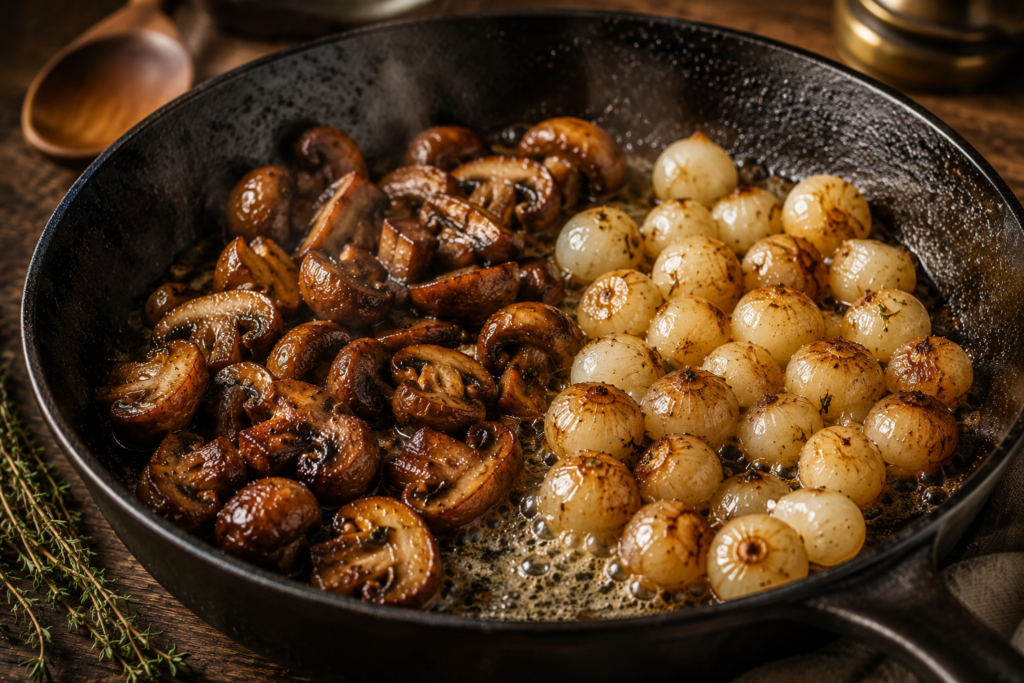
- Prepare the Mushrooms and Pearl Onions Separately
- Finish the Sauce
Why Browning the Beef Matters
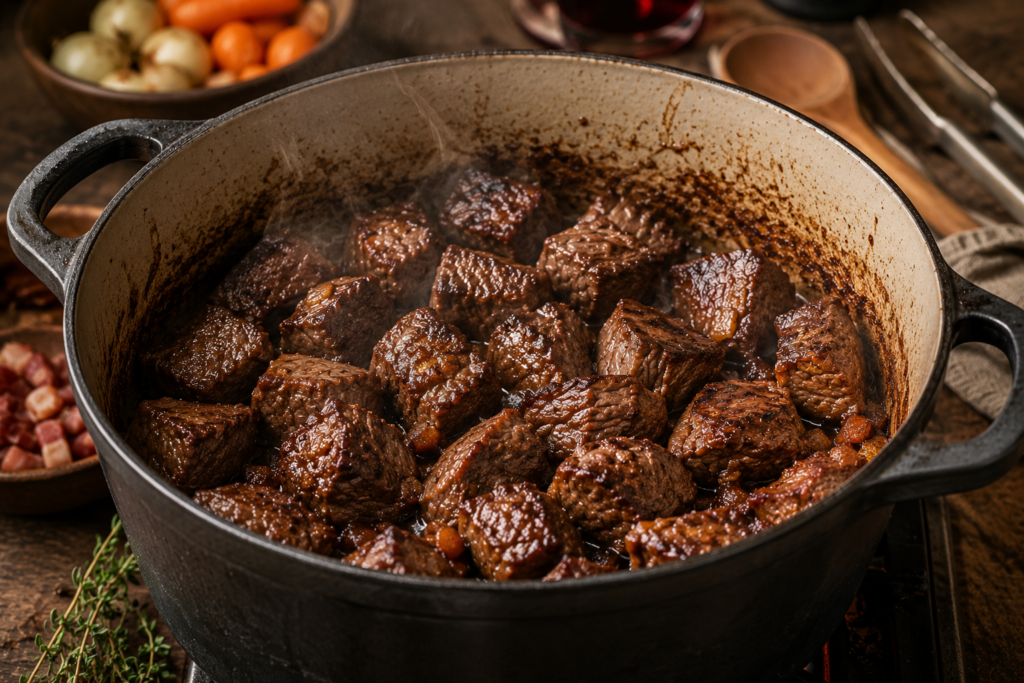
One of the biggest differences between an average beef stew and an exceptional Beef Bourguignon is browning.
When beef is exposed to high heat, complex browning reactions create hundreds of flavorful compounds. We cannot reproduce that depth simply by boiling the meat in wine.
That is why we should take time to brown every side properly.
A dark crust does not mean burnt meat. We are looking for rich caramelized color, not blackened surfaces.
Why We Should Cook the Mushrooms Separately
Mushrooms contain a significant amount of water. If we place them directly into the stew at the beginning, they can release moisture and become soft before they develop their best roasted flavor.
Sautéing them separately solves this problem.
The mushrooms become golden, meaty, and concentrated, then absorb some of the finished wine sauce when added near the end.
How to Know When Beef Bourguignon Is Done
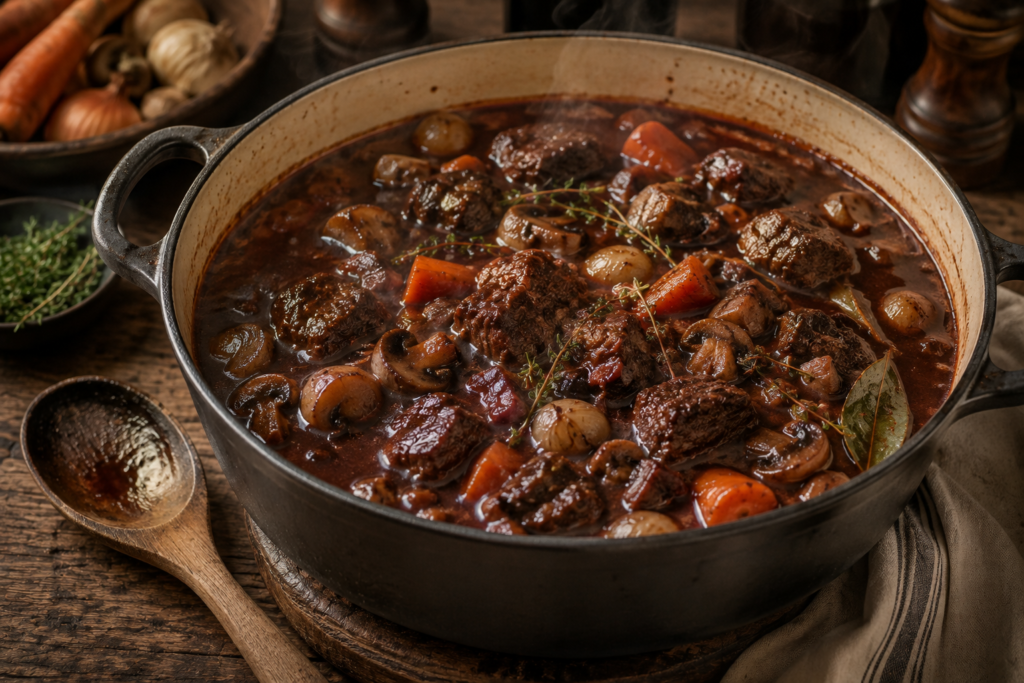
We should not judge doneness solely by cooking time.
The exact cooking time depends on:
- The size of the beef pieces
- The cut of beef
- The oven temperature
- The type of Dutch oven
- The amount of liquid
- The individual oven
The best test is texture.
Insert a fork into a piece of beef. When the meat is fork-tender and nearly falling apart, it is ready.
If the meat is still chewy after three hours, it usually needs more time rather than higher heat.
Best Side Dishes for Beef Bourguignon
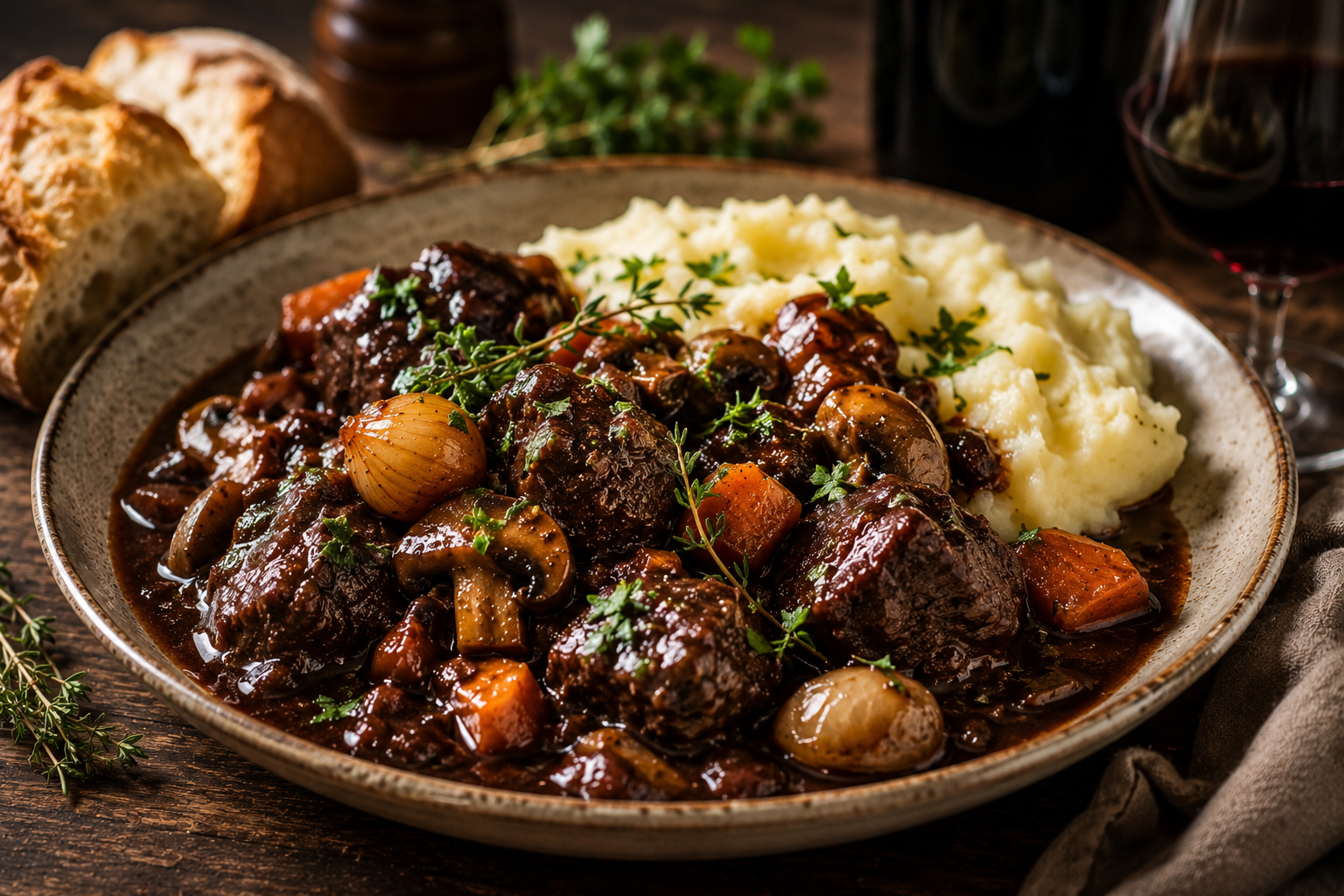
The sauce is one of the greatest parts of the dish, so we should serve Beef Bourguignon with something capable of absorbing it.
Excellent options include:
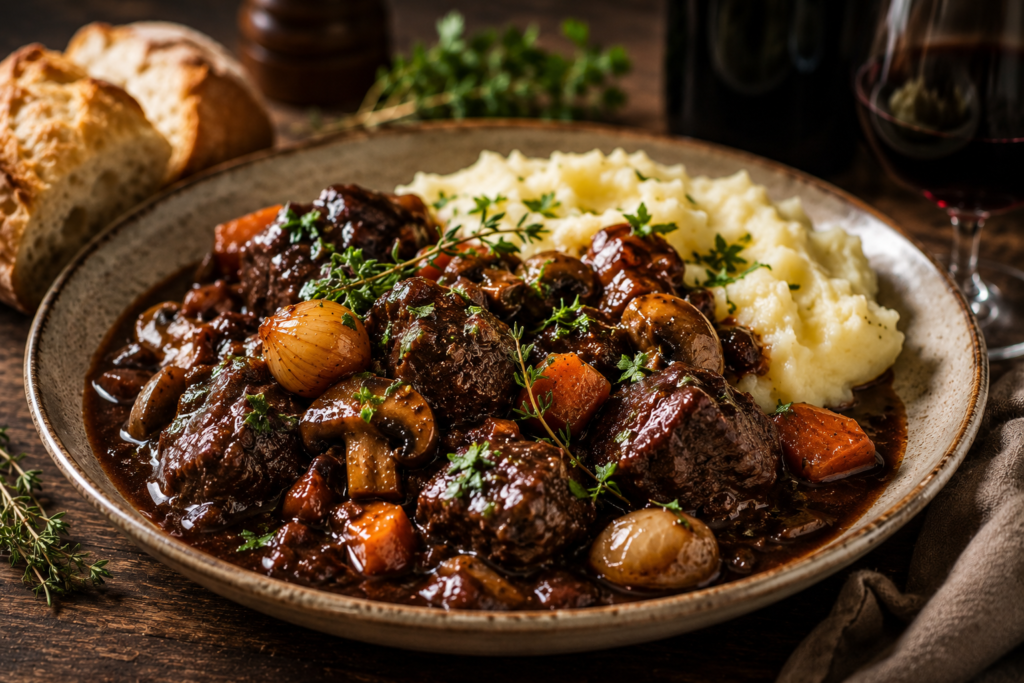
Creamy mashed potatoes are perhaps the most comforting pairing. The buttery potatoes provide a mild base for the intense beef and wine sauce.
Buttered egg noodles are another classic option and make the dish especially satisfying.
Crusty French bread is perfect for soaking up every final spoonful of sauce.
Steamed or roasted potatoes work beautifully when we want something slightly lighter.
For vegetables, simple green beans, peas, or roasted carrots provide freshness and color alongside the rich stew.
Make-Ahead Beef Bourguignon
Beef Bourguignon is one of those dishes that can actually taste better the next day.
After the stew cools, refrigerate it in an airtight container. The flavors have time to meld, the wine becomes more integrated, and the sauce often becomes even richer.
To reheat, warm it slowly over low to medium heat. Avoid aggressive boiling because it can toughen the beef and cause the sauce to reduce too much.
For dinner parties, we can prepare the entire dish a day in advance and gently reheat it shortly before serving.
Storage and Reheating
Allow leftovers to cool safely before refrigerating.
Stored properly in the refrigerator, Beef Bourguignon is generally best enjoyed within a few days.
For longer storage, we can freeze the stew in airtight freezer-safe containers.
When reheating frozen Beef Bourguignon, thaw it safely in the refrigerator and then warm it gently on the stovetop.
If the sauce becomes overly thick after refrigeration, a small splash of beef stock or water can restore its original consistency.
Classic Beef Bourguignon Recipe at a Glance
Key Technique
The recipe succeeds through three major stages:
Brown deeply → Braise slowly → Reduce and finish carefully
That sequence creates the rich texture and concentrated sauce associated with a great French beef stew.
Tips for the Best Beef Bourguignon
Dry the beef thoroughly before browning. Moisture is the enemy of deep caramelization.
Brown the meat in batches. Crowding the pot prevents proper browning.
Use a heavy Dutch oven. Even heat distribution helps maintain a gentle, consistent braise.
Choose dry red wine. The wine should complement the beef rather than overpower it with sweetness.
Do not rush the cooking process. Tough beef needs time for connective tissue to break down.
Keep the simmer gentle. A hard boil can damage the texture of the meat.
Cook mushrooms separately. This produces a more concentrated mushroom flavor.
Taste the sauce at the end. Salt and acidity can change during reduction, so final seasoning should happen after the sauce has concentrated.
Frequently Asked Questions About Beef Bourguignon
Can We Make Beef Bourguignon Without Alcohol?
Yes. We can replace the red wine with additional beef stock, although the flavor will not be identical to traditional Beef Bourguignon. A small amount of balsamic vinegar or another acidic ingredient can help provide some balance, but it should be added carefully.
Can We Make Beef Bourguignon in a Slow Cooker?
Yes. Beef Bourguignon can be adapted to a slow cooker, although browning the beef and vegetables beforehand remains highly recommended. The slow cooker is convenient, but the final sauce may need to be reduced separately on the stovetop.
Can We Use Cabernet Sauvignon Instead of Burgundy Wine?
Yes. A dry Cabernet Sauvignon, Pinot Noir, Merlot, or similar red wine can work. The wine does not need to come from Burgundy to produce a delicious stew.
Why Is My Beef Bourguignon Tough?
The most common reason is that it has not cooked long enough. Tough cuts of beef can remain firm for a long period and then suddenly become tender as connective tissue breaks down. Gentle, extended cooking is usually the solution.
Why Is My Sauce Too Thin?
Remove the lid and simmer the stew gently on the stovetop until some of the liquid evaporates. We should avoid adding large amounts of flour at the end, because excessive flour can make the sauce heavy and pasty.
Final Thoughts
A truly satisfying Classic Beef Bourguignon is built on patience, technique, and high-quality ingredients rather than complicated preparation. The combination of beautifully browned beef, dry red wine, aromatic vegetables, herbs, mushrooms, pearl onions, and slow braising produces a dish with extraordinary depth.
The key is to respect each stage of the recipe. We brown the meat properly, develop flavor in the vegetables, deglaze the pot thoroughly, braise the beef slowly, and finish the sauce with care.
When served steaming hot with mashed potatoes, buttered noodles, or crusty bread, Beef Bourguignon becomes the kind of meal that feels both rustic and luxurious—rich enough for a special occasion but comforting enough for a Sunday dinner.
For the best result, we should make it a day ahead when possible. The extra resting time allows the flavors to become even more harmonious, giving us a deeply satisfying French-inspired meal with tender beef and a velvety red-wine sauce.
Check out: Classic American Mac and Cheese Recipe – Extra Cremy & Easy
Get Access Now: Recipes
Best Pasta for American Mac and Cheese Recipe: Click Here