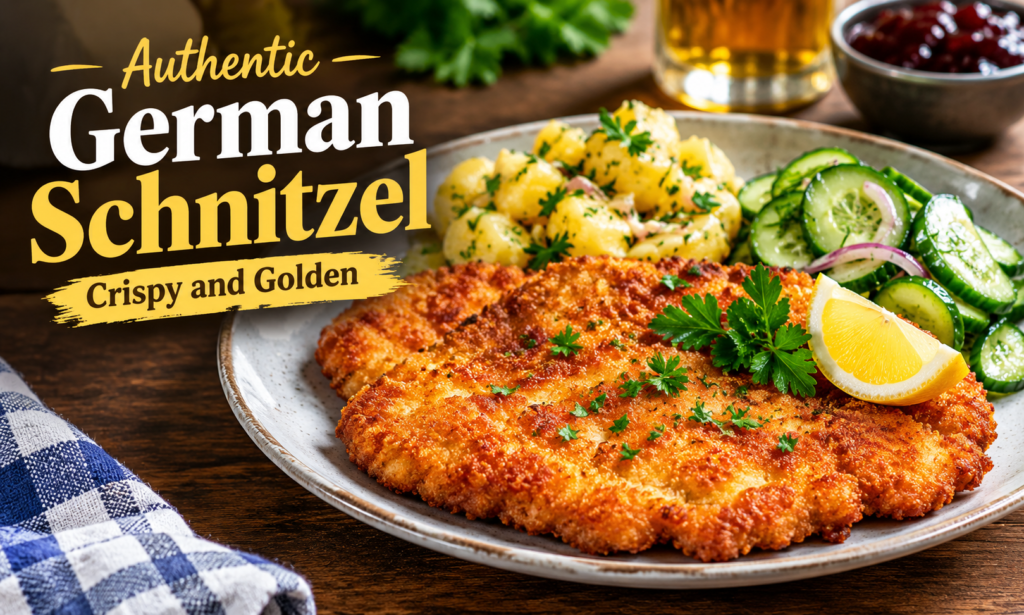
Few dishes represent the simplicity and comfort of German cuisine quite like authentic German schnitzel. A properly prepared schnitzel has everything we look for in a classic comfort food: a tender piece of meat, a delicate golden-brown crust, and an irresistibly crisp texture that stays light rather than greasy.
While schnitzel recipes can vary throughout Germany and Austria, the fundamental technique remains beautifully straightforward. We take a thin piece of meat, season it simply, coat it in flour, egg, and breadcrumbs, and fry it until the exterior becomes crisp and golden while the inside remains juicy and tender.
The secret is not a complicated ingredient list. It is the technique.
In this guide, we will prepare a traditional-style German schnitzel with careful attention to the meat, breading, frying temperature, and serving method.
Table of Contents
What Is German Schnitzel?
Schnitzel is a thin, breaded cutlet that is traditionally fried until golden and crisp. The word refers primarily to the preparation rather than one particular type of meat.
In Germany, pork schnitzel is especially common and is often known as Schnitzel Wiener Art, meaning “Viennese-style schnitzel.” Authentic Wiener Schnitzel, however, is specifically made with veal and is associated with Austrian cuisine.
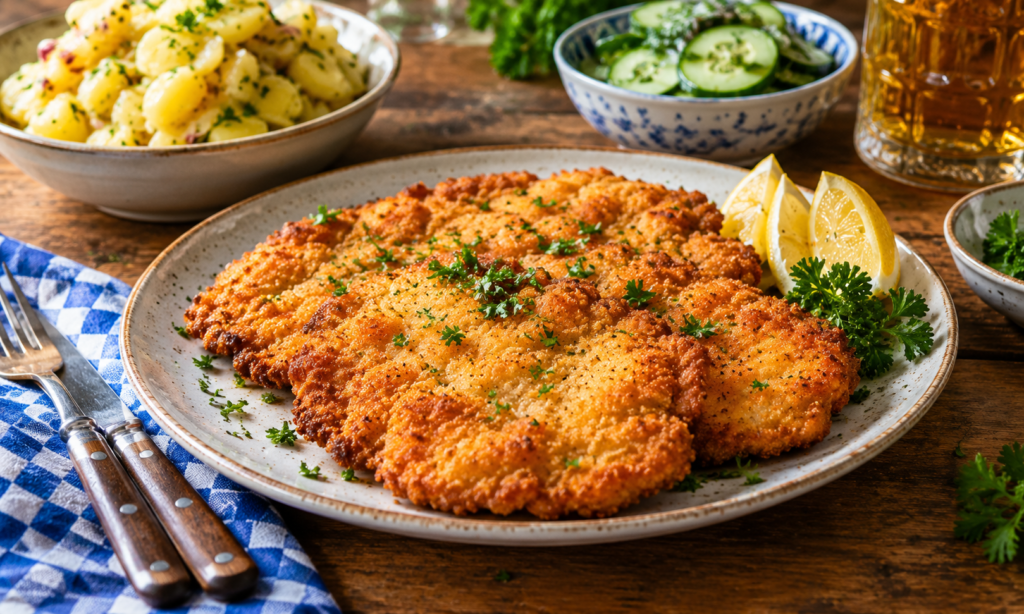
For a German-style schnitzel, pork is an excellent choice because it is affordable, flavorful, and remains tender when properly pounded and quickly fried.
A good schnitzel should be:
- Thin and evenly pounded
- Tender and juicy inside
- Crisp and golden outside
- Lightly seasoned
- Freshly fried
- Served immediately
The finished cutlet should not feel heavy beneath the breading. Instead, the crust should be delicate enough to crack pleasantly with every bite.
Ingredients for Authentic German Schnitzel
For approximately 4 servings, we will need:
For the Schnitzel
- 4 boneless pork loin or pork cutlets, approximately 150–180 g each
- ½ cup all-purpose flour
- 2 large eggs
- 1 cup fine breadcrumbs
- 1 teaspoon salt
- ½ teaspoon freshly ground black pepper
- Vegetable oil, neutral frying oil, or clarified butter for frying
- Lemon wedges, for serving
- Fresh parsley, optional
For a Traditional Serving
Schnitzel pairs particularly well with:
- German potato salad
- Cucumber salad
- French fries
- Boiled potatoes
- Mashed potatoes
- Sauerkraut
- Lemon wedges
- Fresh parsley
For the most classic presentation, we recommend keeping the accompaniment simple so the crisp schnitzel remains the centerpiece.
Choosing the Right Meat for Schnitzel
The meat makes a noticeable difference in the final texture.
For a German pork schnitzel, we can use boneless pork loin, pork chops with the bone removed, or another lean pork cut suitable for quick cooking.
The important part is thickness. Schnitzel should be thin enough to cook quickly without becoming dry.
If the pork is too thick, the outside may become dark before the center reaches the desired temperature. If it is pounded too aggressively, however, the meat can become fragile and difficult to bread.
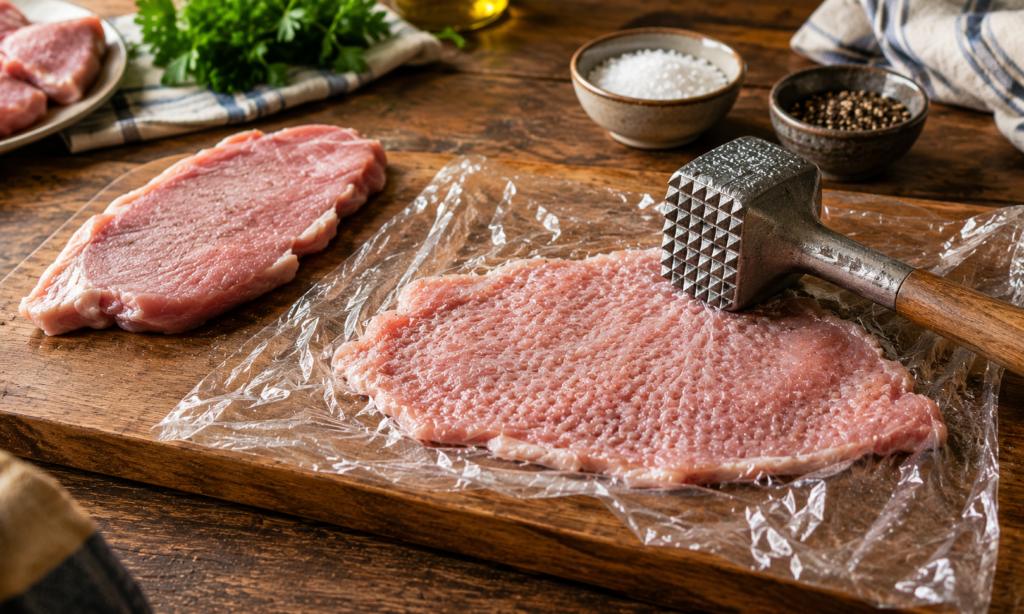
We should place each cutlet between two sheets of plastic wrap or parchment and gently pound it with a meat mallet until it reaches approximately ¼ inch (6 mm) thickness.
The goal is an evenly thin cutlet rather than a shredded one.
How to Prepare Authentic German Schnitzel
1. Prepare and Pound the Pork
We begin by trimming any excess fat or tough connective tissue from the pork.
Place each cutlet between two sheets of plastic wrap or parchment paper. Using the flat side of a meat mallet, gently pound the meat from the center outward.
Aim for an even thickness of approximately ¼ inch.
Even thickness is important because it allows the schnitzel to cook uniformly and helps prevent some portions from becoming dry while thicker areas remain undercooked.
Once all the cutlets are prepared, pat them dry with paper towels.
2. Season the Meat
Season both sides of the pork with salt and freshly ground black pepper.
Traditional schnitzel does not require an elaborate spice mixture. The flavor comes primarily from the meat, seasoning, and beautifully fried breadcrumb crust.
For that reason, we should resist the temptation to add large amounts of garlic powder, paprika, herbs, or other strong seasonings if the goal is a traditional-style schnitzel.
3. Set Up the Breading Station
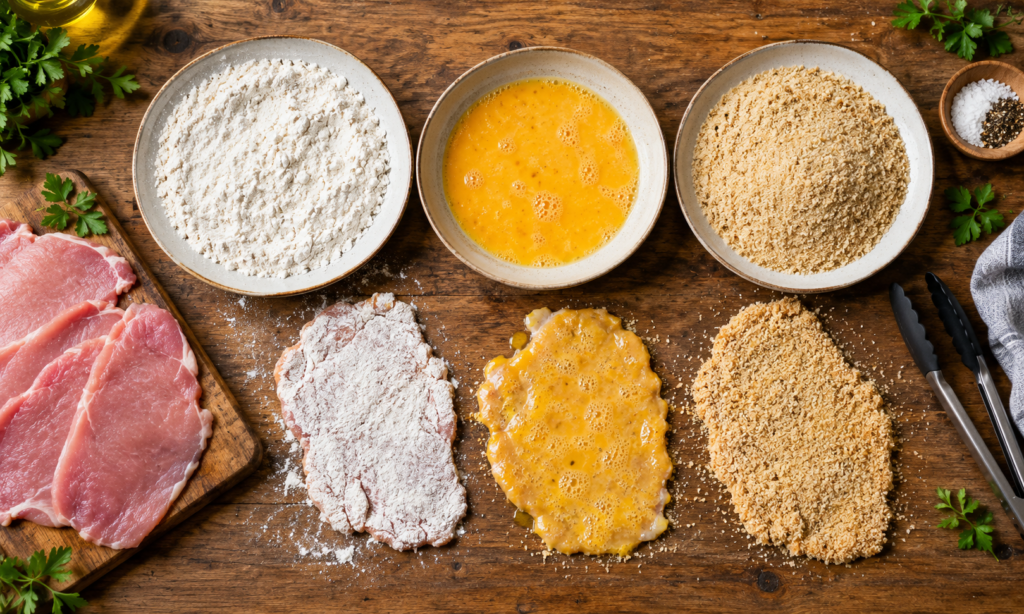
Prepare three shallow dishes.
Place flour in the first dish.
Beat the eggs in the second dish until smooth.
Place the breadcrumbs in the third dish.
We then coat each pork cutlet in the following order:
Flour → Egg → Breadcrumbs
The flour provides a dry surface for the egg to adhere to. The egg creates the binding layer, while the breadcrumbs form the crisp exterior.
4. Coat the Schnitzel Carefully
Take one seasoned cutlet and coat it lightly in flour.
Shake off the excess.
Next, dip it into the beaten egg, making sure the entire surface is covered.
Allow excess egg to drip away before transferring the cutlet to the breadcrumbs.
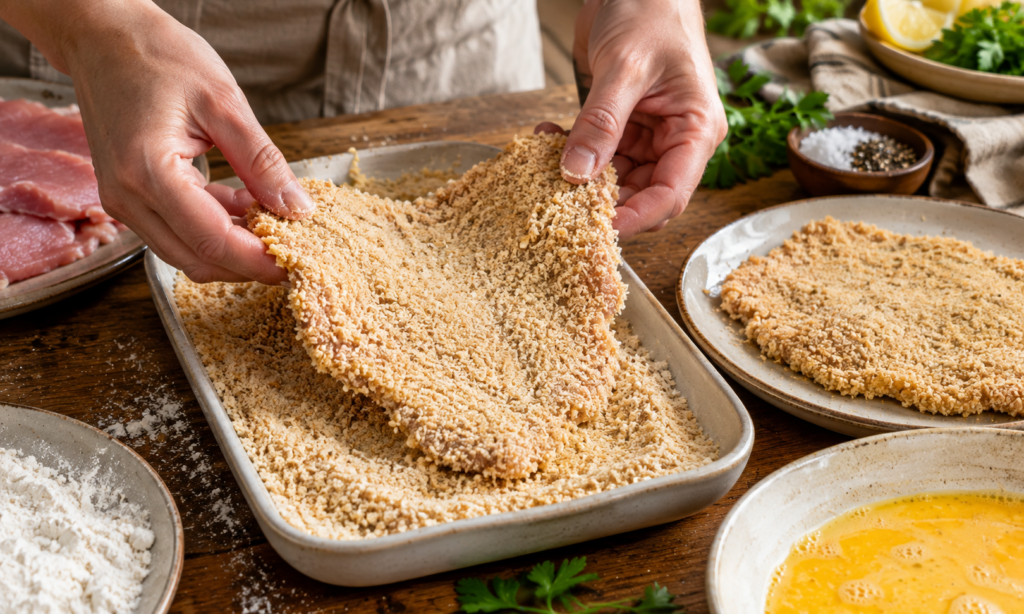
Coat both sides with breadcrumbs, but do not press the breadcrumbs firmly into the meat.
A lighter coating helps create the characteristic loose, delicate schnitzel crust.
This small detail can make a significant difference. Pressing the crumbs aggressively can produce a dense coating instead of a light and crisp one.
Place the breaded schnitzel on a clean plate or tray and repeat with the remaining cutlets.
The Secret to Crispy Golden Schnitzel
One of the most important parts of preparing schnitzel is controlling the frying temperature.
We want the oil hot enough to quickly crisp the breadcrumbs without burning them.
A frying temperature around 350–360°F (175–182°C) works well.
If the oil is too cool, the breadcrumbs absorb excessive oil and become greasy.
If the oil is too hot, the crust can brown too quickly before the pork has finished cooking.
Using enough oil is also important. The schnitzel should have enough room to fry properly rather than sitting in a shallow layer of oil that causes uneven browning.
5. Fry the Schnitzel
Heat a large skillet over medium-high heat and add enough neutral oil to generously coat the bottom.
Once the oil is hot, carefully add the breaded schnitzel.
Do not overcrowd the pan. If necessary, fry the cutlets in batches.
Cook the first side for approximately 2–3 minutes, depending on thickness, until the breadcrumbs become beautifully golden.
Then carefully turn the schnitzel and fry the second side for another 2–3 minutes.
The finished crust should be deep golden, crisp, and evenly browned.
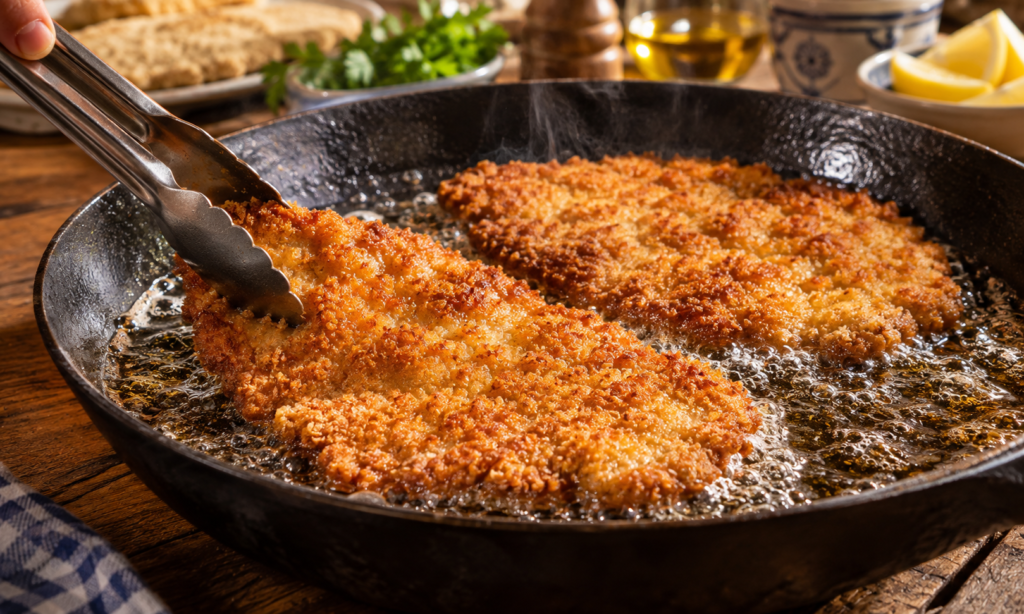
Because the meat is thin, schnitzel cooks quickly. We should avoid leaving it in the pan longer than necessary.
Transfer the cooked schnitzel to a wire rack or paper towels to remove excess oil.
A wire rack is particularly useful because it allows air to circulate around the bottom of the crust, helping it remain crisp.
How to Keep Schnitzel Crispy
Crispiness can disappear quickly if the schnitzel is handled incorrectly after frying.
We recommend the following:
- Fry the schnitzel immediately after breading.
- Avoid stacking freshly fried pieces.
- Drain them briefly rather than leaving them on paper towels for a long time.
- Use a wire rack when possible.
- Serve immediately.
- Keep sauces on the side rather than pouring them over the crust.
If several batches must be prepared, keep the cooked schnitzel warm in a low oven on a wire rack rather than covering it tightly.
What to Serve With German Schnitzel
Traditional German-style schnitzel works beautifully with both fresh and hearty side dishes.
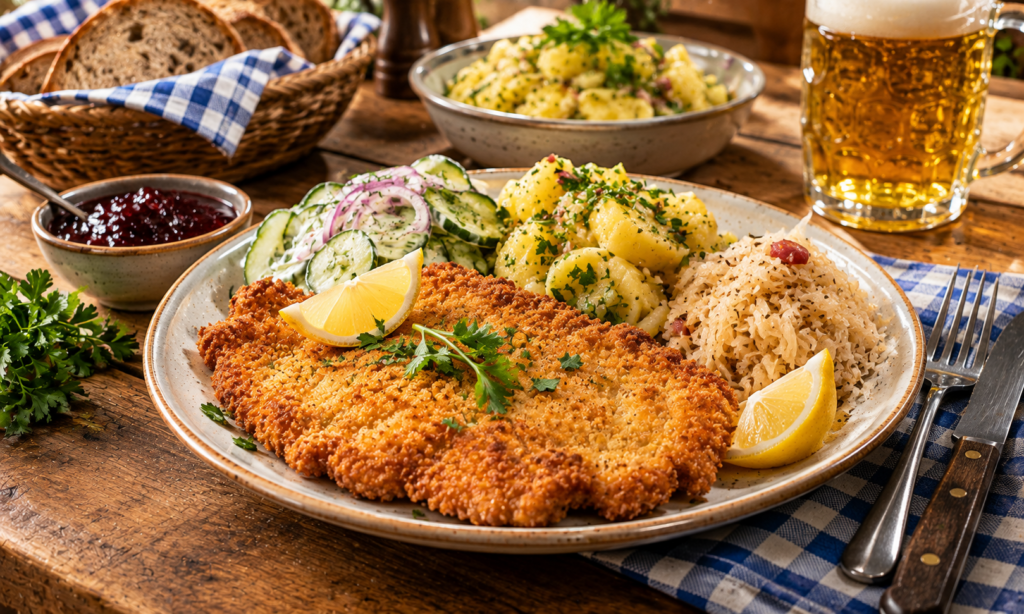
German Potato Salad
A warm or vinegar-based German potato salad provides acidity that balances the richness of the fried crust.
Cucumber Salad
A simple cucumber salad with vinegar, herbs, and a light dressing provides a refreshing contrast.
French Fries
For a comforting restaurant-style plate, crispy fries make an excellent companion.
Boiled Potatoes
Simple boiled potatoes are ideal when we want the schnitzel to remain the focus of the meal.
Sauerkraut
Tangy sauerkraut provides a classic German accompaniment and cuts through the richness of the fried pork.
Lemon
A squeeze of fresh lemon juice immediately before eating adds brightness and enhances the savory flavor of the crust.
Common Schnitzel Mistakes to Avoid
Using Meat That Is Too Thick
Thick pork can take too long to cook and may become dry on the outside before the center is properly cooked.
Skipping the Flour
The flour layer helps the egg adhere to the meat. Without it, the breading may separate during frying.
Overpacking the Breadcrumbs
Pressing breadcrumbs firmly onto the cutlet can make the crust heavy. A loose coating generally produces a lighter texture.
Using Cold Oil
Cold oil causes the breadcrumbs to absorb more fat, resulting in greasy schnitzel.
Overcrowding the Pan
Adding too many cutlets at once can significantly lower the oil temperature and prevent proper browning.
Preparing Schnitzel Too Far in Advance
Schnitzel is best immediately after frying. The longer the crust sits, the more moisture migrates from the meat into the breading.
Can We Make Schnitzel With Chicken?
Absolutely.
Chicken schnitzel follows essentially the same technique. We use boneless, skinless chicken breasts, slice them horizontally if necessary, and pound them evenly thin.
Because chicken breast is naturally lean, careful cooking is especially important. We should cook it until it reaches a safe internal temperature without unnecessarily extending the frying time.
Chicken schnitzel is particularly good with lemon, cucumber salad, potato salad, or a light herb garnish.
Can Schnitzel Be Baked Instead of Fried?
Yes, although the texture will be different.
Traditional schnitzel is fried, which produces the characteristic crisp and lightly blistered breadcrumb crust.
For a lower-oil alternative, breaded cutlets can be baked on a lightly greased baking sheet or cooked using an air fryer. These methods can produce a crisp exterior, but they will not exactly replicate the texture of schnitzel fried in hot oil.
For the most authentic result, pan-frying remains the preferred method.
How to Store and Reheat Schnitzel
Fresh schnitzel is always best, but leftovers can be stored in an airtight container in the refrigerator for approximately 2–3 days.
To restore some crispness, reheat the schnitzel in an oven or air fryer rather than a microwave.
A microwave heats the meat quickly but tends to soften the breadcrumb crust.
When reheating, use moderate heat and warm the schnitzel until it is heated through.
Ingredients
Method
- Pound the pork cutlets evenly to approximately ¼-inch thickness.
- Pat the meat dry and season both sides with salt and pepper.
- Set up three dishes containing flour, beaten eggs, and breadcrumbs.
- Coat each cutlet in flour, then egg, then breadcrumbs.
- Heat oil in a large skillet to approximately 350–360°F.
- Fry the schnitzel for about 2–3 minutes per side until golden brown and crisp.
- Transfer to a wire rack or paper towels.
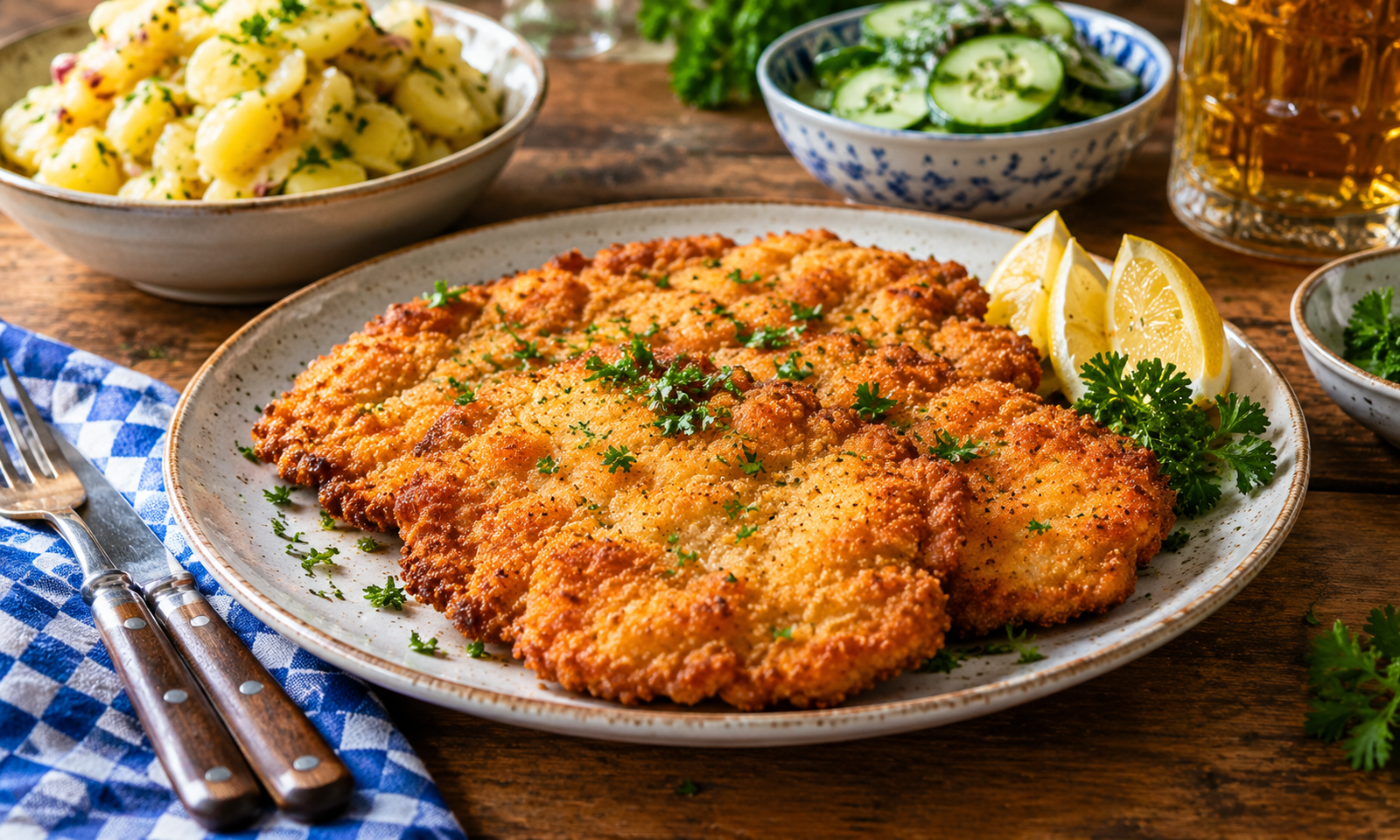
- Serve immediately with fresh lemon wedges and traditional German side dishes.
Final Tips for Perfect German Schnitzel
The best schnitzel comes from respecting a few simple principles: thin meat, simple seasoning, light breading, properly heated oil, and immediate serving.
We do not need an elaborate marinade or complicated sauce to make an impressive schnitzel. The beauty of this classic dish lies in its contrast—the crisp golden coating against tender, juicy meat.
For the most authentic experience, serve the schnitzel fresh from the skillet with a squeeze of lemon, a simple potato or cucumber salad, and perhaps some tangy sauerkraut.
When the crust crackles as we cut into it and the pork remains tender inside, we know the technique has worked exactly as intended.
Check out: Classic Beef Bourguignon (Julia Child-Style): A Rich, Traditional French Beef Stew
Get Access Now: Recipes
Classic German Cooking: Click Here