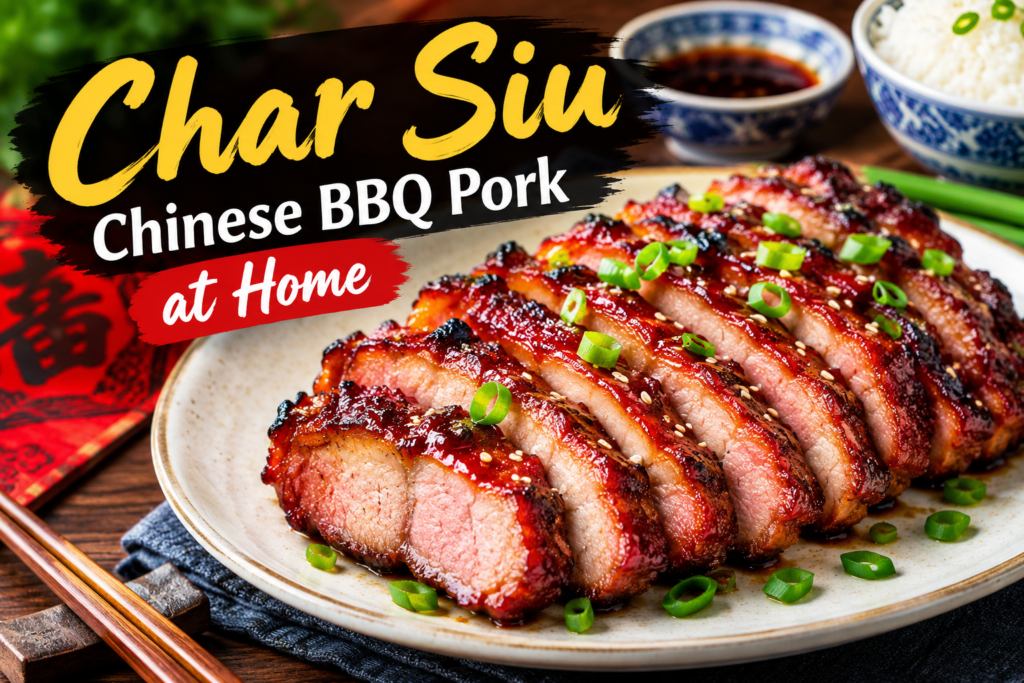
Char Siu is a classic Cantonese dish known for its tender pork, glossy reddish glaze, sweet-savory flavor, and irresistible roasted aroma. Popular in Chinese restaurants, barbecue shops, and noodle houses, this traditional Chinese BBQ pork is delicious served over steamed rice, tucked into bao buns, or sliced into noodle bowls. The good news is that we can recreate this restaurant-style favorite at home using a simple marinade, a hot oven, and a flavorful glaze.
In this recipe, we prepare homemade Char Siu Chinese BBQ Pork with a balanced combination of hoisin sauce, soy sauce, honey, Chinese five-spice powder, garlic, and other pantry-friendly ingredients. Marinating the pork allows the flavors to penetrate the meat, while roasting and glazing create the characteristic sticky coating.
Whether we are preparing a special weekend dinner, building a homemade Chinese takeaway meal, or exploring authentic Cantonese cooking, this Char Siu recipe delivers delicious results without requiring specialized barbecue equipment.
Table of Contents
What Is Char Siu?
Char Siu, also written as cha siu or chashao, is a traditional Cantonese roasted pork dish originating in southern China. Its name is commonly translated as “fork-roasted,” referring to the traditional method of skewering seasoned pork and roasting it over a fire.
The dish is especially associated with Cantonese cuisine and Hong Kong-style barbecue shops, where strips of marinated pork are roasted until tender and coated in a shiny, flavorful glaze.
Traditional Char Siu typically combines sweet, savory, aromatic, and slightly smoky flavors. Hoisin sauce, soy sauce, sugar or honey, fermented bean-based seasonings, and Chinese five-spice powder help create its distinctive taste. Some recipes also use red fermented bean curd or red food coloring to achieve the familiar reddish appearance.
At home, we can make excellent Char Siu using an ordinary oven. Although the flavor and texture will differ slightly from pork roasted over charcoal or in a commercial Chinese roasting oven, a carefully prepared marinade and a final high-heat glazing step produce a delicious homemade version.
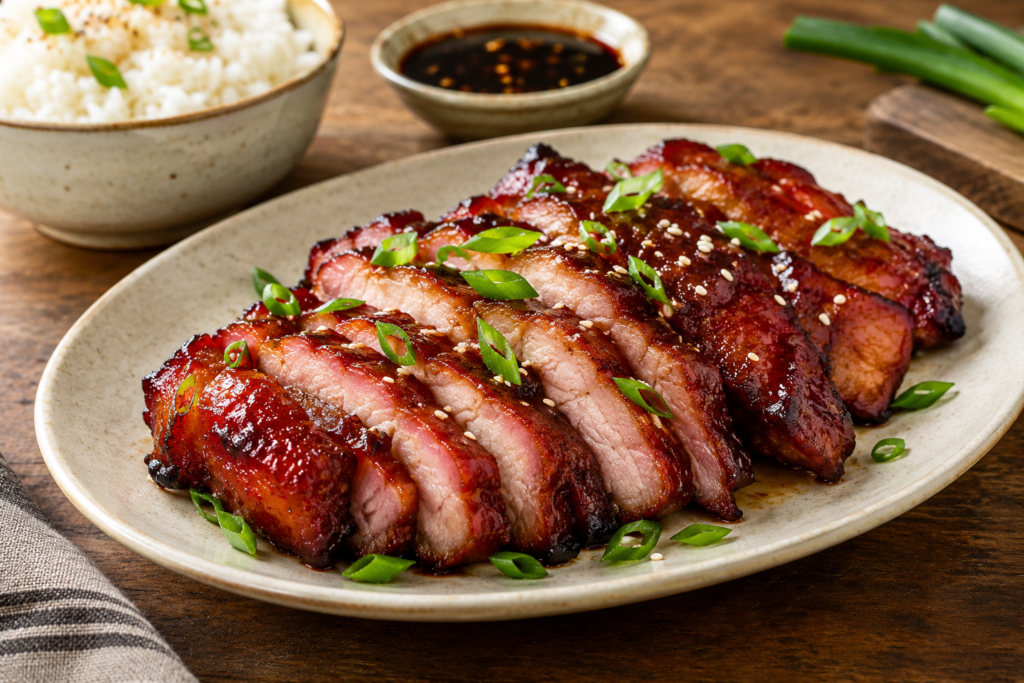
Why We Love This Homemade Char Siu Recipe
- Sweet and savory flavor: Hoisin sauce, soy sauce, honey, and aromatic spices create a balanced Chinese BBQ marinade.
- Tender, juicy pork: Choosing a suitable cut and allowing enough marinating time helps keep the meat flavorful.
- Glossy barbecue glaze: Brushing the pork with reserved, safely handled glaze during the final cooking stage creates an attractive finish.
- Easy oven preparation: We do not need a professional Chinese barbecue oven or specialized equipment.
- Versatile serving options: Char Siu pairs beautifully with rice, noodles, steamed buns, stir-fried vegetables, and Asian-inspired salads.
- Great for meal preparation: We can cook the pork ahead of time and use the leftovers in several different meals.
Ingredients for Homemade Chinese BBQ Pork
The ingredients below create a flavorful marinade for approximately four servings.
For the Pork
- 900 g (2 lb) boneless pork shoulder or pork butt, cut into long strips approximately 4–5 cm thick
- 1 tablespoon neutral cooking oil, if needed for the final glaze
Pork shoulder is an excellent choice because its fat content helps the meat remain juicy during roasting. Pork butt, which is part of the shoulder, also works well. Pork tenderloin can be used for a leaner variation, although it cooks faster and can dry out if overcooked.
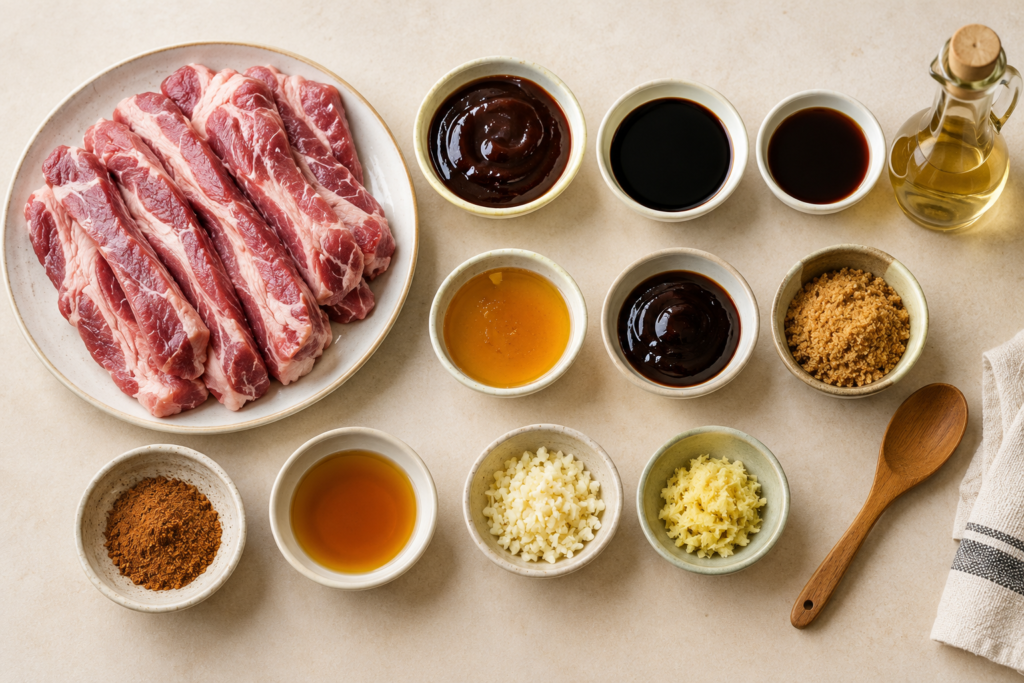
For the Char Siu Marinade
- 3 tablespoons hoisin sauce
- 2 tablespoons light soy sauce
- 1 tablespoon dark soy sauce
- 2 tablespoons honey
- 1 tablespoon Chinese rice wine or dry sherry
- 1 tablespoon oyster sauce
- 1 tablespoon brown sugar
- 1 teaspoon Chinese five-spice powder
- 3 garlic cloves, finely minced
- 1 teaspoon freshly grated ginger
- 1 teaspoon toasted sesame oil
- 1 tablespoon water, if needed to adjust consistency
For the Finishing Glaze
- 1 tablespoon honey
- 1 tablespoon reserved, uncontaminated marinade
- 1 teaspoon water, if needed
We should reserve the glaze before adding raw pork to the marinade. Alternatively, we can prepare a fresh glaze using clean ingredients. Never use marinade that has contacted raw pork unless it has been thoroughly cooked.
Optional Ingredients
- 1 teaspoon red fermented bean curd, mashed, for a more traditional flavor
- A small amount of red food coloring, if desired for a restaurant-style appearance
- A pinch of ground white pepper for extra warmth
The red color is optional. Authentic flavor depends much more on the marinade, seasoning, and roasting technique than on the color of the finished meat.
How to Make Char Siu: Step-by-Step Instructions
Step 1: Prepare the Pork
Pat the pork dry with paper towels and trim away any excessively thick pieces of surface fat. Cut the meat into long strips approximately 4–5 cm thick.
Keeping the strips relatively uniform helps them cook evenly. Avoid cutting the pork into very thin pieces, as they can dry out before the glaze develops its characteristic sticky finish.
If using pork tenderloin, cut it into thick, even strips and plan for a shorter cooking time.
Step 2: Mix the Chinese BBQ Marinade
In a large bowl, combine the hoisin sauce, light soy sauce, dark soy sauce, honey, rice wine, oyster sauce, brown sugar, Chinese five-spice powder, minced garlic, grated ginger, and sesame oil.
Whisk until the sugar dissolves and the mixture becomes smooth and thick.
Taste a small amount of the marinade before adding the pork. It should have a balanced combination of sweetness, saltiness, aromatic spices, and umami. If it tastes too salty, a little water or additional honey can help balance the flavor.
Reserve approximately two tablespoons of marinade in a separate clean container for the glaze.
Step 3: Marinate the Pork
Add the pork strips to the bowl and turn them several times until every surface is coated with the marinade.
Transfer the pork and marinade to a covered container or a food-safe resealable bag. Refrigerate for at least 4 hours, although marinating overnight for approximately 8–12 hours generally produces better flavor.
Turn the pork once or twice during marination if convenient.
Refrigeration is important for food safety. We should not leave raw pork marinating on the kitchen counter.
Step 4: Preheat the Oven
Preheat the oven to 200°C (400°F).
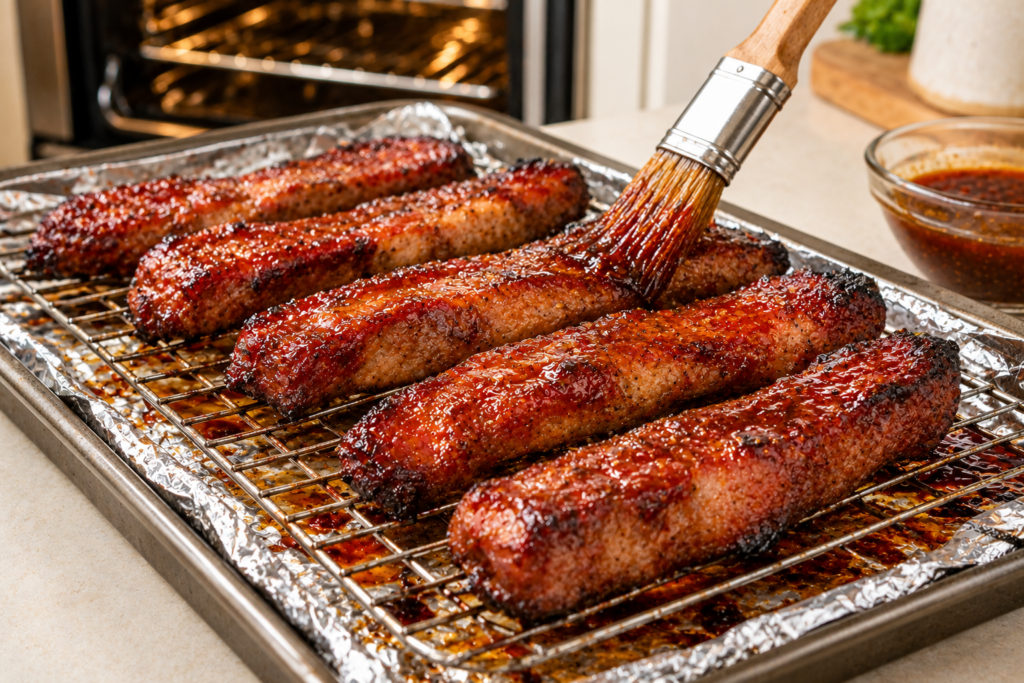
Line a roasting tray with foil for easier cleanup, then place a wire rack over the tray. Arrange the pork strips on the rack, leaving space between each piece so hot air can circulate.
Add a little water to the tray beneath the rack if appropriate for the roasting setup, making sure the meat does not sit directly in the liquid. This can help reduce smoking from dripping marinade.
Discard the marinade that contacted the raw pork unless it will be thoroughly cooked.
Step 5: Roast the Pork
Place the tray in the preheated oven and roast for approximately 25–40 minutes, depending on the thickness of the strips and the cut of pork.
Turn the pork halfway through cooking to encourage even browning.
Begin checking the internal temperature early rather than relying entirely on the clock. Whole cuts of pork should reach at least 63°C (145°F), followed by a three-minute rest, according to standard food-safety guidance. Pork shoulder may benefit from additional cooking for a more tender texture, while leaner cuts can become dry if cooked excessively.
For the most reliable result, use a meat thermometer inserted into the thickest part of the pork.
Step 6: Prepare the Sticky Char Siu Glaze
While the pork roasts, combine the reserved uncontaminated marinade with honey and a little water in a small saucepan.
Heat gently, stirring until the mixture becomes glossy and slightly thicker. If the glaze contains marinade that previously touched raw pork, bring it to a thorough boil and cook it completely before using.
The finished glaze should be thick enough to coat the back of a spoon but fluid enough to brush over the meat.
Honey and sugar brown quickly, so we should apply the glaze toward the end of roasting rather than exposing the pork to repeated high-sugar glazing throughout the cooking process.
Step 7: Glaze and Caramelize
During the final 5–10 minutes of roasting, brush the pork generously with the prepared glaze.
Return the tray to the oven and allow the glaze to become sticky and caramelized. Turn the meat carefully and apply another thin layer if desired.
For extra browning, we can briefly use the oven grill or broiler, watching continuously to prevent burning. Sugary marinades can darken very quickly under intense heat.
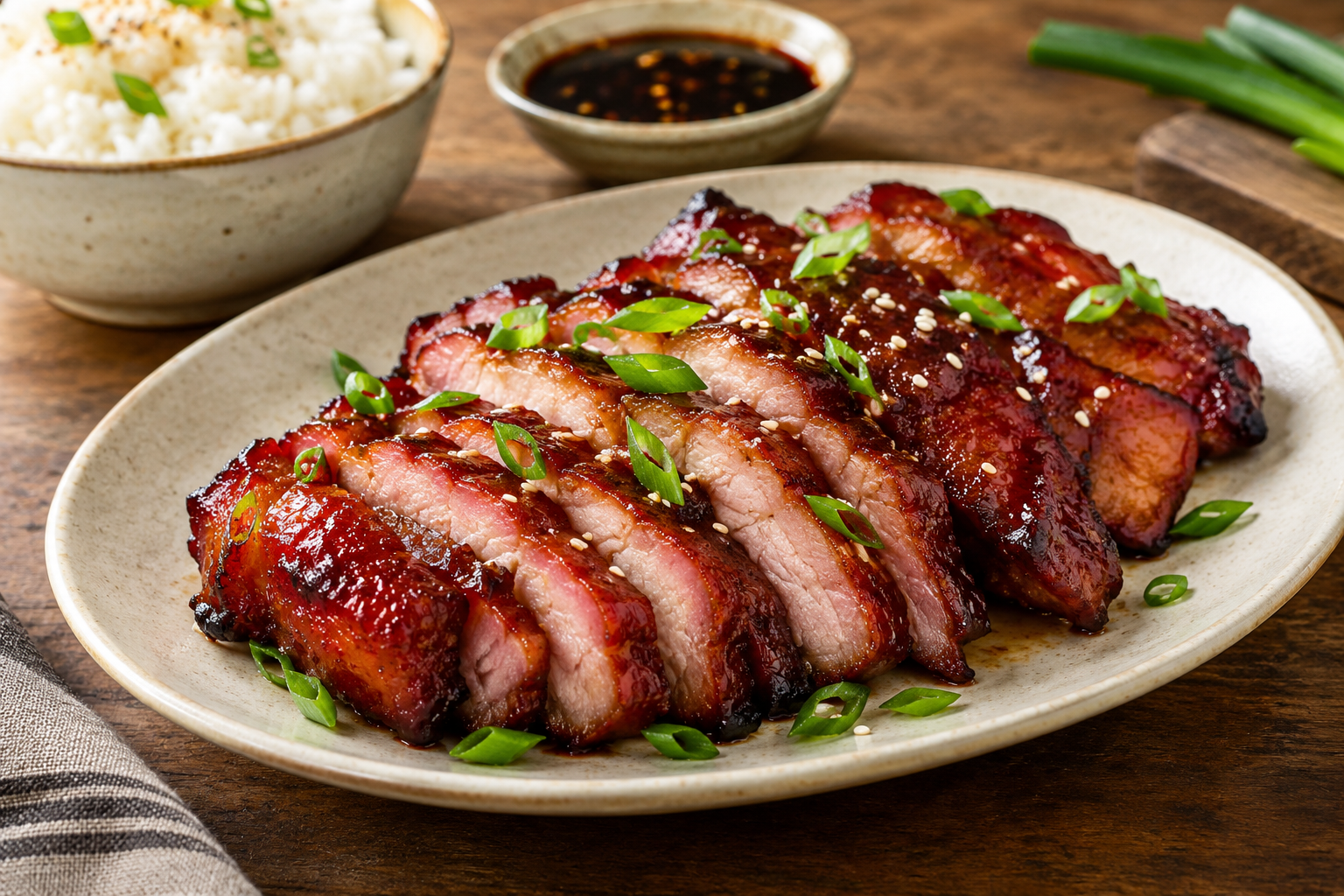
The finished pork should have a glossy exterior, lightly charred edges, and a juicy interior.
Step 8: Rest and Slice
Remove the pork from the oven and allow it to rest for approximately 5–10 minutes.
Slice the meat across the grain into thin pieces. Cutting against the grain shortens the muscle fibers, making each bite easier to chew.
Arrange the slices on a serving platter and brush with any remaining cooked glaze.
Our homemade Char Siu Chinese BBQ Pork is now ready to serve.
Homemade Char Siu Chinese BBQ Pork
Ingredients
Method
- Mix the marinade ingredients and reserve two tablespoons before adding raw pork.
- Coat the pork thoroughly and refrigerate for 4–12 hours.
- Preheat the oven to 200°C (400°F). Arrange the pork on a wire rack over a lined tray.
- Roast for approximately 25–40 minutes, turning halfway through and checking the internal temperature.
- Brush with the prepared glaze during the final 5–10 minutes and caramelize carefully.
- Rest for 5–10 minutes, slice against the grain, and serve.
Tips for the Best Char Siu at Home
1. Choose the Right Cut of Pork
Pork shoulder is one of the best choices for home-style Char Siu because it contains enough fat to support a juicy texture. Pork butt offers similar advantages.
Pork tenderloin is suitable when we prefer leaner meat, but it needs closer temperature monitoring. Very lean pork loin can also work, although it is less forgiving when overcooked.
2. Allow Enough Time for Marination
A short marinade can flavor the surface, but several hours allow the seasonings to distribute more effectively throughout the meat.
For convenient meal preparation, we can marinate the pork the night before and roast it the following day. Keep the container covered and refrigerated throughout the process.
3. Balance Sweetness and Saltiness
Hoisin sauce, soy sauce, oyster sauce, and honey each contribute different characteristics. Hoisin adds sweetness and fermented depth, soy sauce supplies salt and umami, and honey encourages browning.
We should avoid adding too much soy sauce or oyster sauce because their combined saltiness can overpower the pork.
4. Apply the Glaze Near the End
The glossy exterior is one of Char Siu’s most recognizable features. However, honey and brown sugar can burn when exposed to high heat for too long.
Brushing on the glaze during the final stage allows it to caramelize without becoming excessively dark or bitter.
5. Use a Meat Thermometer
Visual appearance alone cannot reliably confirm that pork has reached a safe internal temperature.
A thermometer helps us avoid both undercooking and unnecessary overcooking. Insert it into the thickest section without touching the roasting tray.
6. Rest the Pork Before Slicing
Resting allows the meat to settle after cooking and makes slicing easier. Use a sharp knife and cut across the grain for tender, attractive slices.
What Does Char Siu Taste Like?
Char Siu combines several flavors in a single bite.
The exterior is sweet, savory, aromatic, and slightly smoky, with a glossy layer of caramelized sauce. Hoisin and oyster sauces contribute depth, soy sauce provides saltiness, and Chinese five-spice powder introduces warm notes of star anise, cinnamon, cloves, fennel, and Sichuan pepper or other regional spice variations.
The interior should remain moist and flavorful, especially when pork shoulder is used.
Unlike heavily smoked American barbecue pork, traditional Cantonese Char Siu emphasizes a balanced sweet-savory marinade and a lacquered roasted exterior rather than a thick smoke ring or a dry spice rub.
What to Serve with Chinese BBQ Pork
Char Siu is versatile enough to complement simple side dishes as well as elaborate Chinese-inspired meals.
Steamed Jasmine Rice
Fluffy rice balances the rich glaze and absorbs the savory juices. Add sliced spring onions and a light drizzle of soy sauce for a simple meal.
Chinese Noodles
Serve sliced Char Siu over egg noodles or wheat noodles with bok choy and a light broth. The pork adds sweetness and depth to the bowl.
Steamed Bao Buns
Soft steamed buns make an excellent base for sliced barbecue pork. Add cucumber, spring onions, and a little hoisin sauce for contrast.
Stir-Fried Vegetables
Garlic bok choy, broccoli, snow peas, or green beans provide freshness and crunch that complement the sweet glaze.
For a complete dinner, we can serve Char Siu with steamed rice, stir-fried greens, and a light soup. For a casual lunch, it works beautifully in noodle bowls, rice bowls, or homemade sandwiches.
How to Store and Reheat Char Siu
Proper storage helps preserve the flavor and texture of leftover Chinese BBQ pork.
Refrigeration: Transfer leftovers to a shallow, airtight container and refrigerate within two hours of cooking. Use refrigerated leftovers within three to four days.
Freezing: For longer storage, divide the pork into meal-sized portions, seal them in freezer-safe containers or bags, and freeze. For the best quality, use within two to three months.
Reheating in the oven: Place the sliced pork in an oven-safe dish with a small amount of water or reserved cooked sauce. Cover and heat until steaming hot.
Reheating in a skillet: Warm the slices over medium-low heat with a spoonful of water or sauce. Avoid prolonged cooking, which can dry out the meat.
Microwave reheating: Arrange the pork in a microwave-safe dish, add a little liquid, cover loosely, and heat in short intervals until hot throughout.
Reheat leftovers to 74°C (165°F) for food safety. Thaw frozen pork in the refrigerator rather than on the kitchen counter.
Common Char Siu Mistakes to Avoid
Using Pork That Is Too Lean
Very lean cuts can become dry before the glaze develops properly. Pork shoulder generally offers a better balance of tenderness, flavor, and moisture.
Skipping the Marinade
Cooking the pork immediately after coating it produces a less developed flavor. Whenever possible, allow at least four hours for marination.
Cooking at an Excessively High Temperature
Very high heat can burn the sugary coating before the center cooks. A moderate roasting temperature followed by brief glazing is more reliable.
Adding Glaze Too Early
Honey and sugar brown rapidly. Applying the glaze near the end of cooking helps produce a glossy exterior without excessive charring.
Slicing the Meat Immediately
Cutting straight into the pork can make serving messier and release more juices onto the cutting board. Allowing a short resting period improves handling and presentation.
Ignoring Internal Temperature
Cooking times vary with meat thickness, oven calibration, and the starting temperature of the pork. A thermometer is more dependable than a fixed cooking time.
Char Siu Variations to Try
Honey Char Siu
For a sweeter finish, increase the honey slightly and brush a thin additional layer over the pork during the final minutes of roasting. Watch closely because extra sugar increases the risk of burning.
Spicy Char Siu
Add a small amount of chili paste or chili oil to the marinade for a gentle heat that contrasts with the sweet glaze.
Garlic Char Siu
Increase the garlic and add a little extra grated ginger for a more aromatic version. This variation pairs especially well with noodles and stir-fried vegetables.
Lean Char Siu with Pork Tenderloin
Use pork tenderloin for a leaner dish. Because it cooks faster than shoulder, begin checking the internal temperature early and remove the meat once it reaches the appropriate safe temperature.
Char Siu Without Red Food Coloring
Skip the coloring entirely and rely on dark soy sauce, honey, and caramelization for a naturally deep reddish-brown finish. The flavor remains delicious even when the pork is not bright red.
Frequently Asked Questions About Char Siu
Can we make Char Siu without a Chinese barbecue oven?
Yes. A conventional oven works very well for homemade Char Siu. A wire rack, suitable roasting tray, flavorful marinade, and final glazing step help reproduce the dish’s characteristic roasted exterior.
Which pork cut is best for Char Siu?
Pork shoulder or pork butt is generally an excellent choice because the fat helps maintain moisture. Pork tenderloin is a leaner alternative, but it requires closer monitoring to prevent overcooking.
How long should we marinate Char Siu pork?
Marinate the pork for at least four hours in the refrigerator. Approximately 8–12 hours is convenient for developing a deeper flavor without requiring last-minute preparation.
Why is restaurant Char Siu red?
The color can come from red fermented bean curd, food coloring, and the appearance of the roasted marinade. Some restaurants use coloring to create a vivid red exterior, but it is not essential for making delicious Char Siu at home.
Is Char Siu sweet or savory?
It is both. The honey and sugar provide sweetness, while soy sauce, hoisin sauce, oyster sauce, and fermented seasonings contribute saltiness and umami. Five-spice powder adds aromatic complexity.
Can we make Char Siu in an air fryer?
Yes, provided the pork strips fit comfortably in the basket. Cook in a single layer according to the appliance’s instructions, check the internal temperature with a thermometer, and apply the sugary glaze toward the end to reduce burning. Cooking times vary by appliance and thickness.
Can we prepare Char Siu ahead of time?
Yes. We can marinate the pork the previous evening and cook it the next day. Cooked Char Siu can also be refrigerated and reheated for convenient meals during the following few days.
Can we use chicken instead of pork?
Yes. Boneless chicken thighs can be prepared with a similar Cantonese-inspired marinade, although the cooking time and safe internal temperature differ. Chicken should reach an internal temperature of 74°C (165°F).
What is the difference between Char Siu and pulled pork?
Char Siu is traditionally prepared as roasted strips of marinated pork with a glossy sweet-savory glaze. Pulled pork is generally cooked until the meat becomes soft enough to shred, often using a dry rub and a longer low-temperature cooking method.
Is Char Siu gluten-free?
Traditional recipes may contain gluten in soy sauce, hoisin sauce, oyster sauce, and other condiments. To make a gluten-free version, choose verified gluten-free alternatives for every relevant ingredient and check the product labels carefully.
Final Thoughts: Make Restaurant-Style Char Siu at Home
Homemade Char Siu Chinese BBQ Pork brings the flavors of Cantonese barbecue into an ordinary kitchen. With pork shoulder, a balanced marinade, enough time for the seasonings to develop, and a carefully applied honey glaze, we can prepare a dish that is tender, glossy, and full of sweet-savory flavor.
The key is to avoid rushing the marination, monitor the internal temperature, and reserve the sugary glaze for the final stage of roasting. Once the pork is rested and sliced, it becomes an easy centerpiece for rice bowls, noodle dishes, bao buns, and complete Chinese-inspired dinners.
Prepare this Char Siu recipe for a weekend meal, serve it fresh from the oven, and save the leftovers for quick lunches throughout the week. With a few simple techniques, Chinese BBQ pork at home can become a reliable favorite for both special occasions and everyday cooking.
Check out: Crispy Sesame Chicken (Takeout-Style)
Get Access Now: Recipes
Pivalo Charcoal Barbeque Grill Set: Click Here