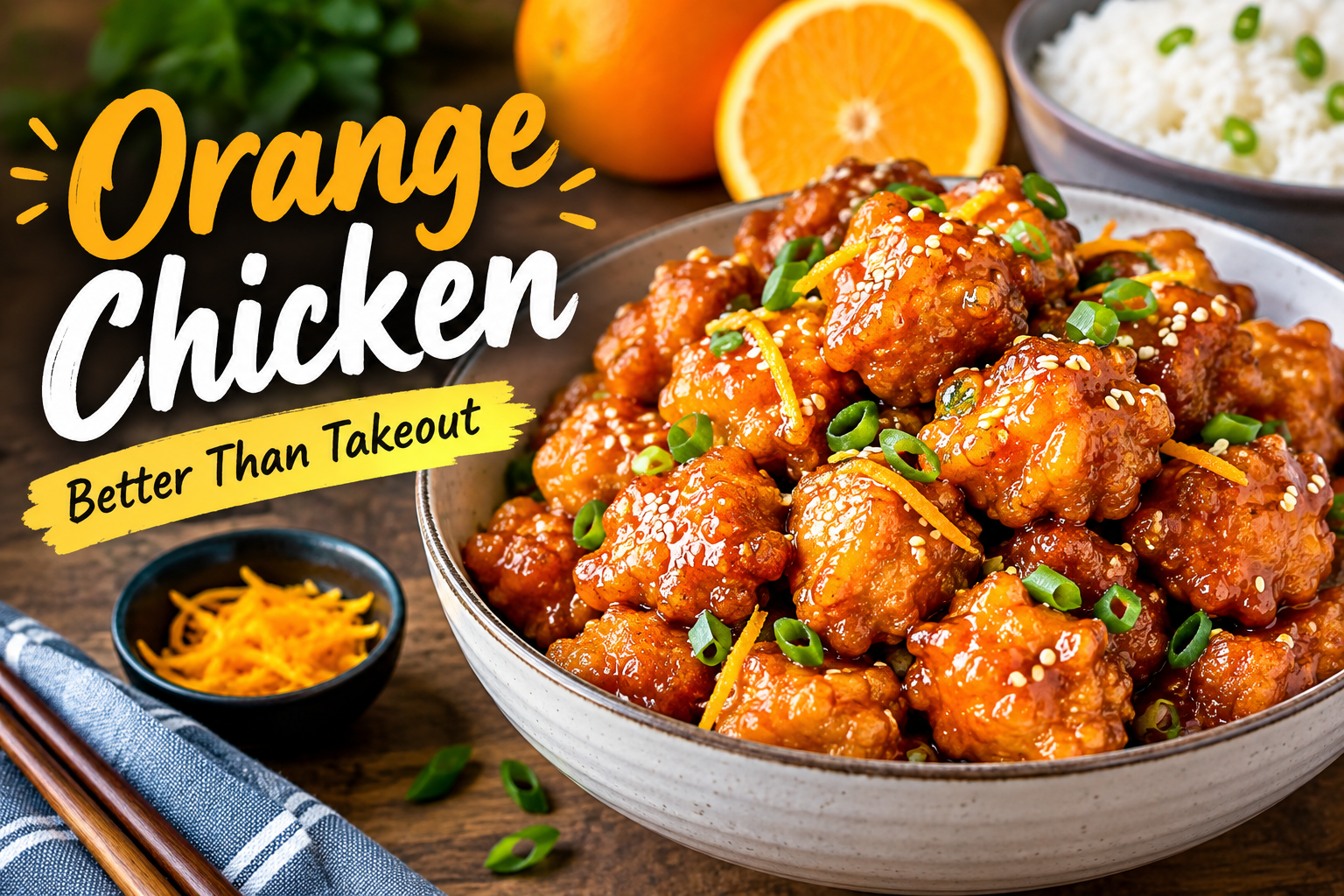
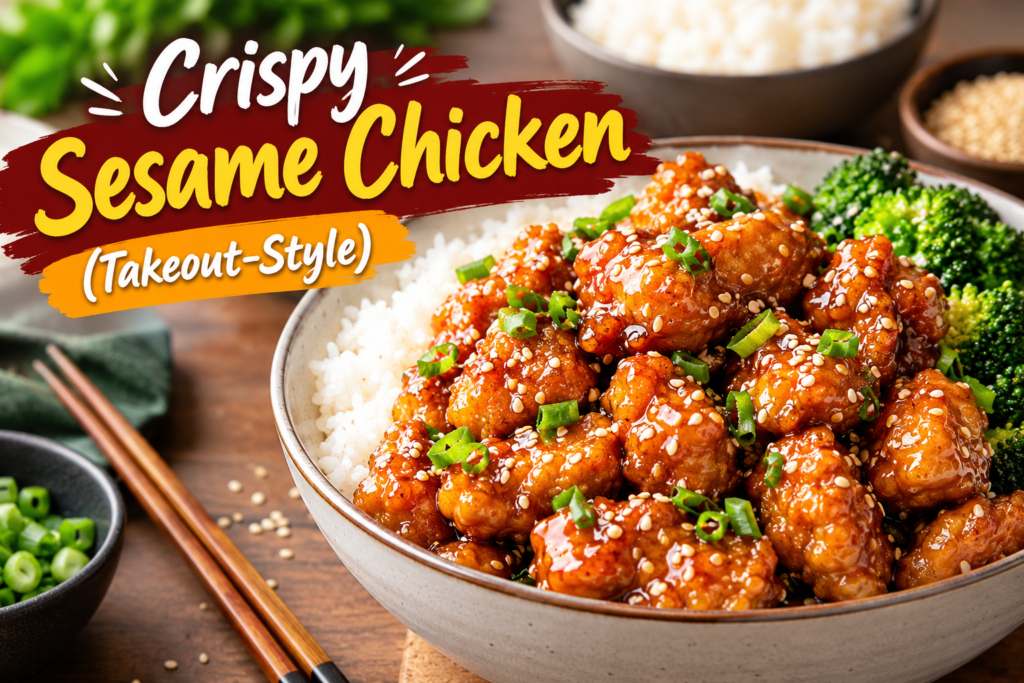
Crispy Sesame Chicken is a popular Chinese-American takeout favorite featuring golden, crunchy chicken pieces coated in a sweet, savory, and slightly tangy sesame sauce. Each bite combines tender chicken, a crisp coating, toasted sesame seeds, and a glossy sauce that clings beautifully to the chicken. Served over steamed rice with fresh vegetables, this homemade version delivers restaurant-style flavor without requiring a trip to your favorite takeout restaurant.
The secret to making exceptional takeout-style sesame chicken lies in three essential elements: a flavorful chicken marinade, a light and crispy coating, and a perfectly balanced sesame sauce. When we prepare these components correctly, we achieve chicken that is crunchy on the outside, juicy on the inside, and full of delicious flavor.
This easy Crispy Sesame Chicken recipe is ideal for busy weeknight dinners, family meals, and homemade Chinese-inspired feasts. We can prepare the ingredients in advance, cook the chicken until golden, and toss everything together in a freshly prepared sauce in just a few simple steps.
Table of Contents
Why We Love This Crispy Sesame Chicken Recipe
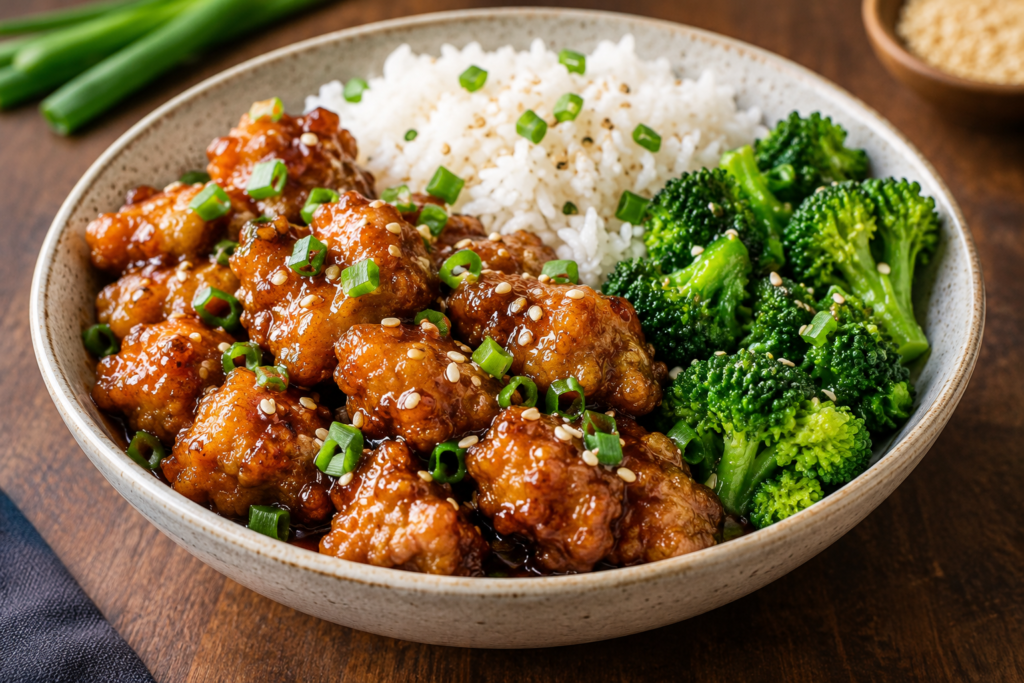
Homemade sesame chicken offers the delicious flavors of restaurant-style Chinese-American cuisine with the flexibility to adjust the ingredients to our preferences.
- Extra-crispy chicken: A combination of cornstarch and all-purpose flour creates a crunchy coating.
- Sweet and savory sesame sauce: Soy sauce, honey, rice vinegar, garlic, and sesame oil create a balanced, flavorful glaze.
- Tender chicken: A short marinade helps season the chicken and keeps it juicy during cooking.
- Simple ingredients: We can prepare this dish using ingredients commonly available in supermarkets.
- Customizable flavor: Adjust the sweetness, tanginess, and heat to suit individual preferences.
- Perfect for meal planning: Prepare the sauce and chop the ingredients ahead of time for quicker cooking.
Whether we serve it with steamed jasmine rice, fried rice, or stir-fried vegetables, this crispy sesame chicken makes a satisfying meal for the entire family.
Ingredients for Crispy Sesame Chicken
We divide the ingredients into three groups: the chicken marinade, the crispy coating, and the homemade sesame sauce. Preparing each component separately helps us achieve consistent results.
For the Chicken
- 500 g boneless, skinless chicken thighs or chicken breasts
- 1 tablespoon soy sauce
- 1 tablespoon rice vinegar
- 1 teaspoon sesame oil
- 1 teaspoon freshly grated ginger
- 2 cloves garlic, finely minced
- 1 large egg
- 2 tablespoons cold water
Chicken thighs are especially suitable because they remain juicy during frying. Chicken breasts are a leaner alternative and work equally well when cut into evenly sized pieces.
For the Crispy Coating
- ½ cup cornstarch
- ½ cup all-purpose flour
- ½ teaspoon baking powder
- ½ teaspoon salt
- ¼ teaspoon ground black pepper
- Neutral oil, such as canola, sunflower, or vegetable oil, for frying
Cornstarch is particularly important because it helps create a light, crisp exterior. All-purpose flour adds structure, while a small amount of baking powder helps produce a delicate, textured coating.
For the Sesame Sauce
- ¼ cup soy sauce
- 3 tablespoons honey
- 2 tablespoons brown sugar
- 2 tablespoons rice vinegar
- ½ cup water or low-sodium chicken broth
- 1 tablespoon toasted sesame oil
- 2 cloves garlic, minced
- 1 teaspoon freshly grated ginger
- 1 tablespoon cornstarch
- 2 tablespoons cold water, for the cornstarch slurry
- 1 tablespoon toasted sesame seeds
- ½ teaspoon chili flakes, optional
The sauce combines sweetness from honey and brown sugar, savory depth from soy sauce, acidity from rice vinegar, and nuttiness from sesame oil and toasted sesame seeds.
For a less sweet version, reduce the brown sugar to 1 tablespoon. For a spicier variation, add chili flakes or a small amount of chili garlic sauce.
How to Make Crispy Sesame Chicken Step by Step
Step 1: Cut and Marinate the Chicken
Cut the chicken into bite-sized pieces, approximately 1 to 1½ inches in size. Keeping the pieces uniform helps them cook evenly and ensures that each piece receives a generous coating.
In a mixing bowl, combine the soy sauce, rice vinegar, sesame oil, grated ginger, minced garlic, egg, and cold water. Add the chicken pieces and mix thoroughly until every piece is coated.
Allow the chicken to marinate for 15–20 minutes. This short resting period gives the meat time to absorb the seasoning while helping the coating adhere during frying.
Avoid leaving the chicken at room temperature for an extended period. If marinating for longer, cover and refrigerate it.
Step 2: Prepare the Crispy Coating
In a separate bowl, combine the cornstarch, all-purpose flour, baking powder, salt, and black pepper.
Mix the dry ingredients thoroughly to distribute the seasoning evenly.
Add the marinated chicken pieces to the flour mixture in small batches. Press the coating gently onto each piece, ensuring that all sides are covered.
For a more textured crust, allow the coated chicken to rest for approximately 5 minutes before frying. Moisture from the marinade will hydrate parts of the coating, creating small irregular flakes that become especially crispy during cooking.
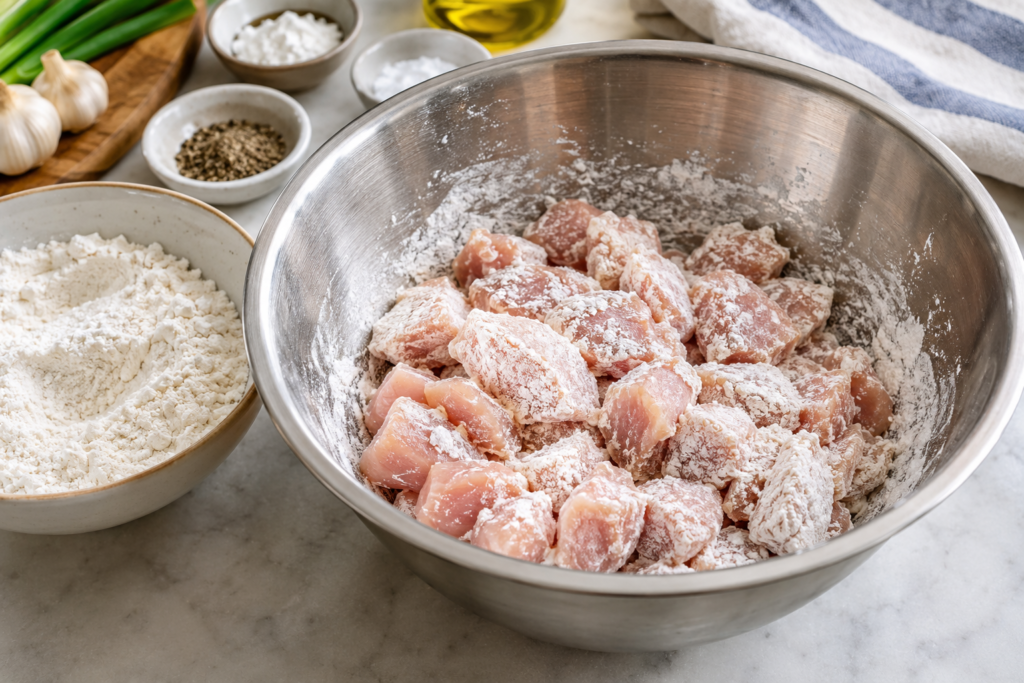
Shake off any loose excess flour before transferring the chicken to the hot oil.
Step 3: Fry the Chicken Until Golden and Crispy
Pour enough neutral oil into a heavy-bottomed pan or deep skillet to allow the chicken pieces to fry without touching the bottom excessively.
Heat the oil to approximately 350°F (175°C). A kitchen thermometer helps maintain a consistent temperature.
Carefully add the coated chicken in small batches. Avoid overcrowding the pan, as too many pieces can lower the oil temperature and result in greasy chicken.
Fry each batch for approximately 4–6 minutes, depending on the size of the pieces, turning occasionally until the coating becomes golden brown and crisp.
The chicken must reach an internal temperature of 165°F (74°C) at its thickest point.
Transfer the cooked chicken to a wire rack set over a tray. A wire rack allows excess oil to drain while helping the coating remain crisp. Paper towels can be used if a rack is unavailable, although trapped steam may soften the bottom of the chicken.
Repeat with the remaining chicken.
Expert tip: For an especially crunchy texture, fry the chicken in two stages. Cook it initially until nearly done, let it rest briefly, and fry it again for 1–2 minutes at approximately 375°F (190°C). Always verify that the chicken reaches a safe internal temperature.
Step 4: Make the Homemade Sesame Sauce
While the chicken drains, prepare the sauce.
In a small bowl, whisk together the soy sauce, honey, brown sugar, rice vinegar, water or chicken broth, toasted sesame oil, minced garlic, and grated ginger.
Pour the mixture into a clean skillet or saucepan and bring it to a gentle simmer over medium heat. Stir frequently to dissolve the sugar and prevent the garlic from scorching.
In another small bowl, combine 1 tablespoon cornstarch with 2 tablespoons cold water. Whisk until smooth to create a slurry.
Slowly pour the slurry into the simmering sauce while stirring continuously. Cook for approximately 1–2 minutes, or until the sauce becomes glossy and lightly thickened.
Stir in the toasted sesame seeds and optional chili flakes.
The finished sauce should coat the back of a spoon without becoming overly thick. Remember that it will continue to thicken slightly as it cools.
If the sauce becomes too thick, add a tablespoon of water at a time until it reaches the desired consistency.
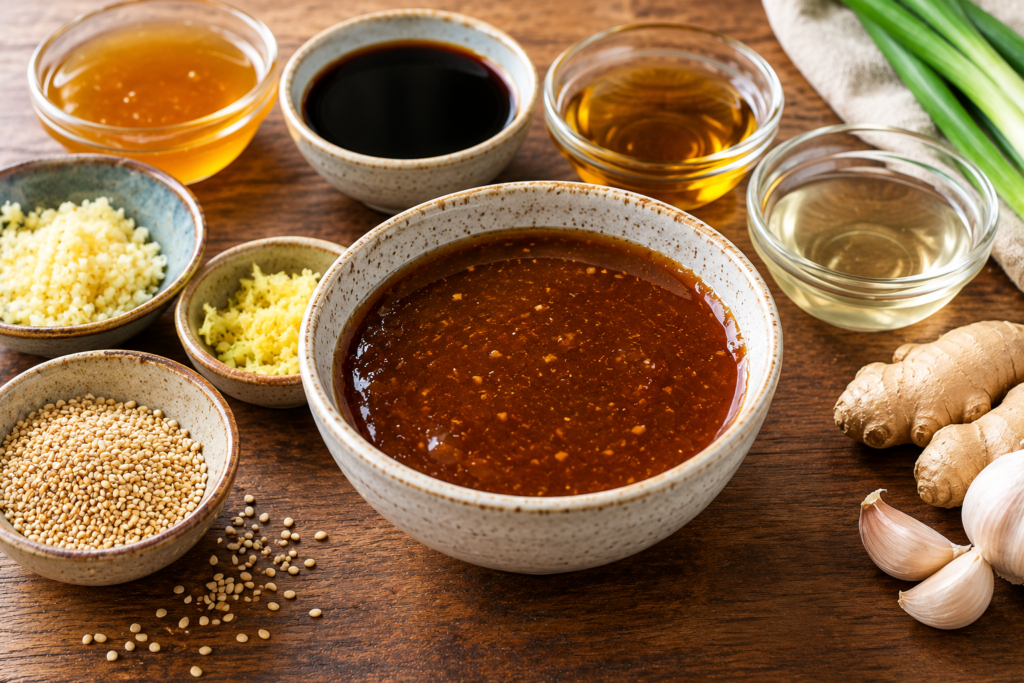
Step 5: Toss the Chicken in the Sesame Sauce
Once the sauce is ready, reduce the heat to low.
Add the fried chicken pieces and toss gently until they are coated evenly. Work quickly to prevent the crispy coating from absorbing too much moisture.
For the best texture, coat only the chicken you plan to serve immediately. If you are preparing extra portions, keep the remaining chicken separate and refrigerate the sauce in another container.
Garnish with additional toasted sesame seeds and sliced green onions.
Serve immediately while the chicken is hot and the contrast between the crunchy coating and sticky sesame glaze is at its best.
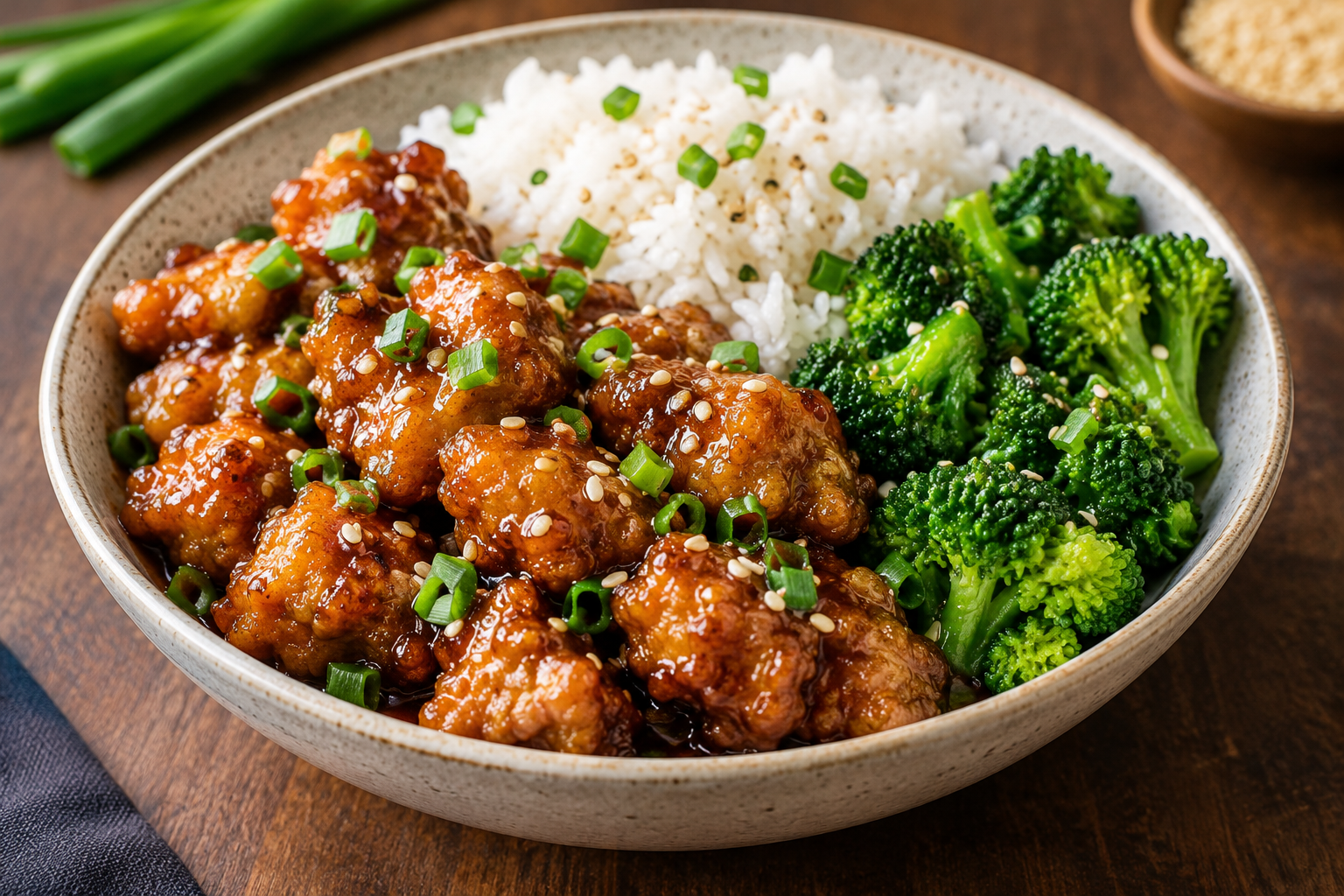
Homemade Crispy Sesame Chicken Recipe
Ingredients
Method
- Marinate the chicken with soy sauce, vinegar, sesame oil, ginger, garlic, egg, and water for 15–20 minutes.
- Mix cornstarch, flour, baking powder, salt, and pepper. Coat the chicken evenly.
- Fry in batches at 350°F (175°C) for approximately 4–6 minutes per batch, until golden and the chicken reaches 165°F (74°C) internally.
- Simmer the sauce ingredients in a separate skillet. Add the cornstarch slurry and stir until glossy and thickened.
- Toss the crispy chicken with the sauce, garnish with sesame seeds and green onions, and serve immediately.
What Makes Sesame Chicken Crispy?
The difference between ordinary fried chicken and restaurant-quality sesame chicken often comes down to the coating, oil temperature, and timing.
Use Cornstarch for a Light, Crunchy Crust
Cornstarch absorbs surface moisture and forms a crisp coating during frying. Combining it with flour produces a balanced texture that is crunchy without being excessively hard.
Using only flour can produce a heavier crust, while a cornstarch-based coating tends to be lighter and more delicate.
Maintain the Correct Oil Temperature
Oil that is too cool allows the coating to absorb excess oil. Oil that is too hot can brown the outside before the chicken cooks through.
Maintaining a temperature around 350°F (175°C) helps the chicken develop an even golden crust while cooking properly inside.
Fry in Small Batches
Overcrowding the pan lowers the oil temperature and creates steam. Steam softens the coating and prevents the chicken from becoming properly crisp.
Frying in smaller batches provides more room for the pieces to cook evenly.
Add the Sauce at the Last Moment
Even perfectly fried chicken will soften if left in a liquid sauce for too long. Tossing it just before serving preserves the best possible texture.
If maximum crunch is your priority, serve the sauce on the side and dip each piece as you eat.
Tips for the Best Takeout-Style Sesame Chicken
- Dry excess surface moisture when necessary: Excess liquid can make the coating slide off. Patting the chicken lightly before marinating can help, but retain enough marinade for the coating to adhere.
- Use fresh garlic and ginger: Fresh aromatics provide a brighter, more complex flavor than dried alternatives.
- Toast the sesame seeds: Briefly toast them in a dry skillet until fragrant, watching carefully to prevent burning.
- Taste the sauce before thickening: Adjust the honey, vinegar, or soy sauce to create your preferred balance.
- Use a wire rack: Air circulation helps preserve the crisp coating after frying.
- Avoid excessive sauce: The chicken should be glazed rather than submerged.
- Serve immediately: Sesame chicken is at its best shortly after the sauce is added.
Variations of Crispy Sesame Chicken
Spicy Sesame Chicken
For a spicy version, add chili flakes, chili garlic sauce, or a small amount of sriracha to the sauce. Increase the heat gradually while balancing the spice with honey and rice vinegar.
Honey Sesame Chicken
To emphasize the honey flavor, replace some of the brown sugar with additional honey. Keep in mind that honey can caramelize quickly, so simmer the sauce gently rather than cooking it over high heat.
Oven-Baked Sesame Chicken
For a lower-oil alternative, arrange the coated chicken pieces on a lightly oiled wire rack over a baking tray. Spray or brush the coating with a small amount of oil and bake in a preheated oven at approximately 425°F (220°C), turning once.
Bake until golden and until the chicken reaches 165°F (74°C) internally. The coating will generally be less crisp than deep-fried chicken, but the result can still be delicious.
Air Fryer Sesame Chicken
Arrange the coated chicken in a single layer in a lightly oiled air-fryer basket. Spray the coating with oil and cook at approximately 380°F (193°C), turning halfway through.
Cooking time varies with the appliance and the size of the chicken pieces, so check the internal temperature and continue cooking as needed. Toss with the sauce immediately before serving.
Vegetarian Sesame Alternative
Replace the chicken with firm tofu or cauliflower florets. Press tofu to remove excess moisture before coating, or dry cauliflower thoroughly after washing.
Cooking times will vary, but the same sweet and savory sesame sauce works well with both alternatives.
What to Serve with Sesame Chicken
Crispy sesame chicken pairs well with simple sides that balance its rich, sweet, and savory flavors.
Steamed Jasmine Rice
Fluffy rice absorbs the sesame glaze and provides a neutral base that complements the chicken.
Vegetable Fried Rice
Rice stir-fried with carrots, peas, spring onions, and egg creates a complete takeout-style meal.
Garlic Broccoli
Tender-crisp broccoli adds freshness and a mild bitterness that balances the sweet sauce.
Vegetable Chow Mein
Stir-fried noodles make the meal more substantial and provide another satisfying texture.
We can also serve sesame chicken with sautéed bell peppers, steamed green beans, cucumber salad, or lightly seasoned mixed vegetables.
How to Store and Reheat Leftover Sesame Chicken
Refrigeration
Allow the chicken to cool slightly and transfer leftovers to an airtight container. Refrigerate within two hours of cooking, or within one hour when the surrounding temperature exceeds 90°F (32°C).
For best food safety, consume refrigerated cooked chicken within 3–4 days.
Whenever possible, store the fried chicken and sauce separately. This helps prevent the coating from becoming excessively soft.
Reheating in the Oven or Air Fryer
Preheat the oven to approximately 375°F (190°C). Arrange the chicken in a single layer and heat until thoroughly hot, checking that the internal temperature reaches 165°F (74°C).
An air fryer can also restore some of the coating’s crispness. Heat in short intervals, checking frequently to avoid drying out the chicken.
If the chicken has already been coated in sauce, some softening is unavoidable. Reheating can improve the texture, but it will not completely restore freshly fried crispness.
Can We Freeze Sesame Chicken?
Yes. For the best texture, freeze the cooked chicken and sauce separately in suitable airtight freezer containers.
For optimal quality, use frozen leftovers within approximately 2–3 months. Thaw safely in the refrigerator and reheat thoroughly before serving.
Frequently Asked Questions About Crispy Sesame Chicken
Is sesame chicken spicy?
Traditional American-style sesame chicken is generally sweet and savory rather than spicy. We can add chili flakes, sriracha, or chili garlic sauce to create a hotter version.
Can we make sesame chicken without eggs?
Yes. The egg can be omitted, although it helps the coating adhere. Use a small amount of water mixed with cornstarch or another suitable egg-free binder to help the dry coating stick to the chicken.
Why is my sesame chicken coating soggy?
The most common reasons are overcrowded frying, oil that is too cool, excessive sauce, or allowing the cooked chicken to sit in the sauce for too long.
For better results, fry in batches, drain on a wire rack, and toss with sauce immediately before serving.
Can we prepare the sesame sauce ahead of time?
Yes. Prepare the sauce up to 3 days ahead and store it in a covered container in the refrigerator. Reheat gently in a saucepan, stirring frequently. If the sauce thickens during storage, add a little water to loosen it.
What is the difference between sesame chicken and General Tso’s chicken?
Both dishes typically feature crispy chicken coated in a flavorful sauce. Sesame chicken is known for its sweet, savory sesame flavor and toasted sesame seed garnish. General Tso’s chicken commonly has a more pronounced combination of sweetness, tanginess, and chili heat, although recipes vary by restaurant.
Can we use chicken breast instead of chicken thighs?
Absolutely. Chicken breast is a lean option that works well in this recipe. Cut it into evenly sized pieces and avoid overcooking, as lean breast meat can dry out more quickly than thighs.
Is homemade sesame chicken healthier than takeout?
Homemade sesame chicken gives us greater control over the amount of oil, sugar, sodium, and portion size. However, deep-fried chicken coated in a sweet sauce can still be energy-dense. Baking or air-frying and reducing the added sugar can help create a lighter version.
Can we make sesame chicken gluten-free?
Yes. Use certified gluten-free tamari or another gluten-free soy sauce, replace the all-purpose flour with a suitable gluten-free flour blend, and verify that the remaining ingredients are gluten-free. Cornstarch is naturally gluten-free, but packaged products should still be checked for cross-contact warnings where relevant.
Final Thoughts on Crispy Sesame Chicken
Crispy Sesame Chicken is an excellent homemade alternative to Chinese-American takeout, combining juicy chicken, a crunchy golden coating, and a glossy sauce made with soy sauce, honey, garlic, ginger, and sesame oil.
By maintaining the correct frying temperature, avoiding overcrowding, thickening the sauce carefully, and coating the chicken immediately before serving, we can create a dish that is flavorful, satisfying, and wonderfully crisp.
Serve it over steamed rice with fresh vegetables, garnish with toasted sesame seeds, and enjoy a restaurant-inspired dinner made in your own kitchen.
The most important tip is simple: keep the chicken crispy, keep the sauce balanced, and combine them only when you are ready to serve.