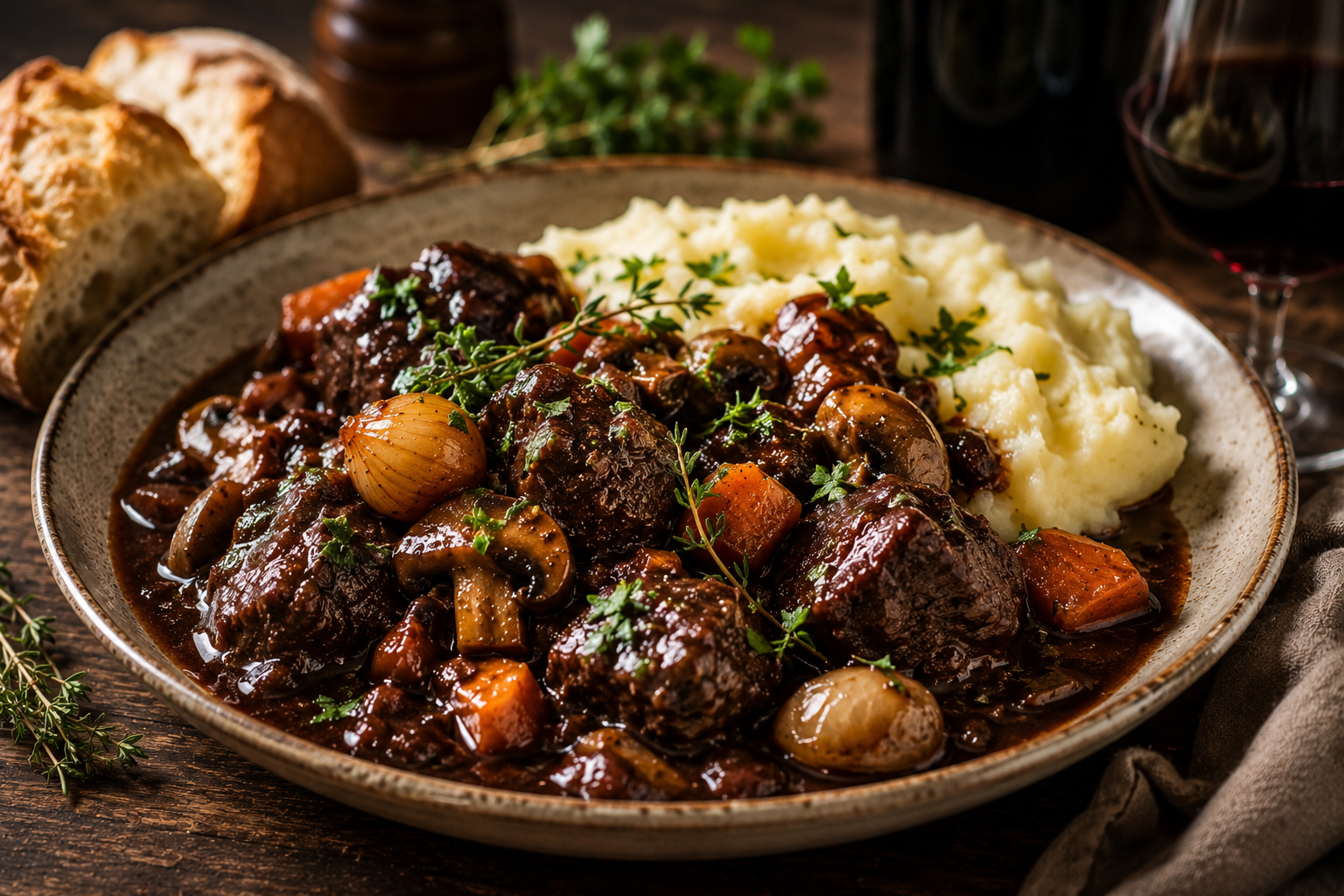
Ingredients
Method
- Prepare and Dry the Beef
- Render the Bacon
- Brown the Beef in Batches
- Cook the Vegetables
- Add the Flour
- Deglaze with Red Wine
- Add Beef Stock and Herbs
- Slow-Braise the Beef
- Prepare the Mushrooms and Pearl Onions Separately
- Finish the Sauce
We begin by patting the beef completely dry with paper towels. This step may look insignificant, but it is essential.Surface moisture prevents the meat from browning effectively. Instead of developing a dark, flavorful crust, wet beef tends to steam in the pan.Once the beef is dry, season it generously with salt and freshly ground black pepper.
Place a large Dutch oven or heavy-bottomed pot over medium heat. Add the diced bacon and cook until the fat renders and the bacon becomes browned and crisp.Transfer the bacon to a plate while leaving the rendered fat in the pot.The bacon fat provides a flavorful foundation for browning the beef.
Increase the heat to medium-high. Add a small amount of olive oil when necessary.Place the beef in the pot in a single layer.Do not overcrowd the pan.This is one of the most important rules in the entire recipe. If we add too much beef at once, the temperature of the pan drops and the meat releases moisture. Instead of browning, the beef begins to simmer.We brown the beef on several sides until the pieces develop a deep golden-brown crust.This process may take several batches, but the extra time is worth it.Remove the browned beef and set it aside.
Add the chopped onions and carrots to the same pot. Cook them for approximately 5 to 7 minutes, stirring occasionally.As the vegetables cook, scrape the browned bits from the bottom of the pot. These caramelized pieces are packed with flavor.Add the minced garlic and tomato paste and cook for approximately one minute.The tomato paste should darken slightly. This creates a more concentrated and complex flavor.
Return the browned beef and bacon to the Dutch oven.Sprinkle the flour over everything and stir thoroughly so the meat and vegetables are evenly coated.Cook for another 1 to 2 minutes, stirring frequently.The flour will later help the cooking liquid develop a naturally thicker, more luxurious consistency.
Now comes one of the defining steps of Beef Bourguignon.Pour in the red wine while scraping the bottom of the pot with a wooden spoon.We want to loosen every browned piece from the bottom.Allow the wine to simmer for several minutes. As it reduces, its sharp alcohol aroma softens and the sauce begins to concentrate.
Add enough beef stock to almost cover the beef.Add:ThymeBay leavesOptional rosemaryA little additional black pepperBring the liquid to a gentle simmer.We should avoid a violent boil. A gentle simmer is ideal because the goal is slow, controlled braising.
Cover the Dutch oven and transfer it to a preheated 325°F (165°C) oven.Cook for approximately 2½ to 3 hours, or until the beef becomes extremely tender.During cooking, we can check the pot once or twice. The liquid should remain at a gentle simmer rather than boiling aggressively.The beef is ready when a fork slides easily into the meat.This is the moment when the tougher connective tissues have transformed into gelatin, giving the stew its famous tenderness and body.
While the beef cooks, prepare the mushrooms.Melt the butter in a skillet over medium-high heat. Add the mushrooms and cook until they are browned and their moisture has evaporated.Season lightly with salt and pepper.Set the mushrooms aside.For the pearl onions, gently sauté them until golden and tender. This separate cooking method allows the onions and mushrooms to retain their shape and develop their own caramelized flavor.Adding them toward the end keeps them from becoming overcooked and disappearing into the sauce.
When the beef is tender, remove the Dutch oven from the oven.Carefully remove the thyme stems and bay leaves.If the sauce appears too thin, simmer the stew uncovered on the stovetop for several minutes.If there is excessive fat floating on the surface, we can gently skim it with a spoon.Return the mushrooms and pearl onions to the pot and simmer for another 10 to 15 minutes.Taste and adjust the seasoning.The finished sauce should be deeply savory, rich, balanced, and slightly wine-forward without tasting harsh or acidic.