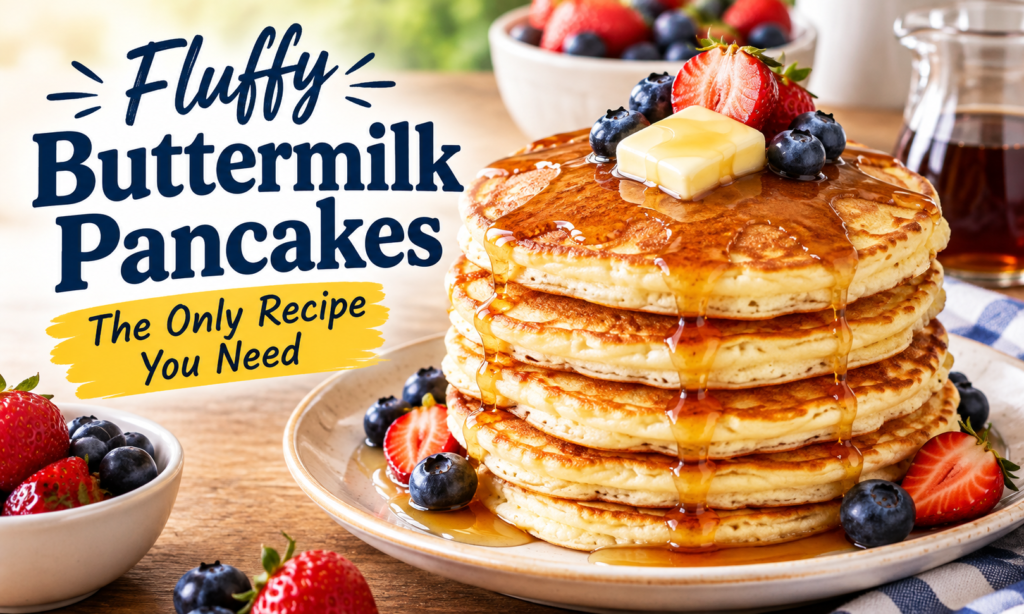
There is nothing quite like a stack of fluffy buttermilk pancakes served warm from the skillet. With their golden-brown edges, soft centers, and light, airy texture, homemade pancakes can turn an ordinary breakfast into something special. This easy buttermilk pancake recipe uses simple pantry ingredients and a few important techniques to create pancakes that are tender, thick, fluffy, and perfectly golden every time.
The secret is the combination of buttermilk and baking soda. Buttermilk adds a gentle tang while its acidity reacts with the baking soda to help the pancakes rise. When combined with properly mixed batter and the right cooking temperature, these ingredients produce the signature fluffy texture we want from classic American pancakes.
Whether we are preparing a relaxed weekend breakfast, a holiday brunch, or a quick family meal, this recipe gives us everything we need for a reliable stack of homemade pancakes.
Table of Contents
Why These Buttermilk Pancakes Are So Fluffy
The texture of a pancake depends on several small details rather than one single ingredient. Buttermilk, for example, provides acidity and moisture while also giving the pancakes a distinctive slightly tangy flavor.
We also use a combination of baking powder and baking soda. Baking powder provides additional leavening, while baking soda reacts with the acidic buttermilk. This combination creates bubbles throughout the batter, helping the pancakes become light instead of dense.
Another important factor is how we mix the batter. We should avoid stirring until it becomes completely smooth. A few small lumps are perfectly acceptable. Overmixing develops gluten, which can make pancakes chewy and heavy rather than tender and fluffy.
Finally, allowing the batter to rest briefly gives the flour time to hydrate and allows the leavening ingredients to begin working before the pancakes reach the skillet.
Ingredients for Fluffy Buttermilk Pancakes
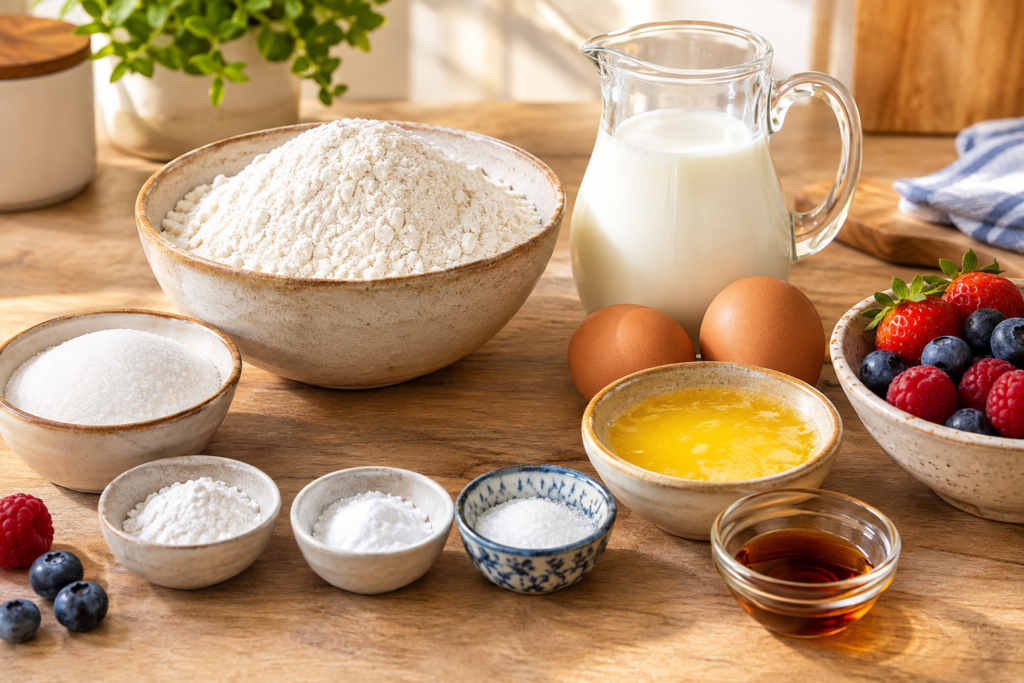
For the best results, we recommend using fresh ingredients and measuring the flour accurately.
- 2 cups all-purpose flour
- 2 tablespoons granulated sugar
- 2 teaspoons baking powder
- 1 teaspoon baking soda
- ½ teaspoon salt
- 2 large eggs
- 2 cups buttermilk
- ¼ cup unsalted butter, melted and slightly cooled
- 1 teaspoon vanilla extract
- Butter or neutral oil, for cooking
For serving, we can use:
- Pure maple syrup
- Butter
- Fresh strawberries
- Blueberries
- Bananas
- Whipped cream
- Powdered sugar
- Chopped nuts
What If We Do Not Have Buttermilk?
If traditional buttermilk is unavailable, we can make a simple substitute. Add 1 tablespoon of lemon juice or white vinegar to 1 cup of milk, stir, and allow it to sit for about 5–10 minutes. The milk will become slightly thickened and acidic.
For this recipe, we can prepare the equivalent of approximately 2 cups of buttermilk substitute.
The flavor will be slightly different from cultured buttermilk, but it works well when needed.
How to Make Fluffy Buttermilk Pancakes
1. Prepare the Dry Ingredients
In a large mixing bowl, whisk together the all-purpose flour, sugar, baking powder, baking soda, and salt.
Mixing the dry ingredients first helps distribute the leavening agents evenly throughout the flour. This means we are less likely to get sections of the pancakes that rise unevenly.
2. Mix the Wet Ingredients
In a separate bowl, whisk together the eggs, buttermilk, melted butter, and vanilla extract.
The melted butter should be slightly cooled before we add it. Extremely hot butter can partially cook the eggs, which is something we want to avoid.
3. Combine Wet and Dry Ingredients
Pour the wet mixture into the bowl containing the dry ingredients.
Using a whisk or rubber spatula, gently fold everything together until the flour is just incorporated.
Do not overmix the batter.
The finished batter should look somewhat thick and slightly lumpy. Small lumps of flour will disappear as the pancakes cook.
If we mix until the batter is completely smooth, the resulting pancakes may become less tender.
4. Let the Batter Rest
Allow the batter to rest for approximately 5–10 minutes.
During this short resting period, the flour absorbs some of the liquid and the batter becomes slightly thicker. This helps us achieve pancakes that hold their shape while cooking.
We should not leave the batter sitting for an excessively long time because the leavening reaction is most useful while the batter is fresh.
5. Heat the Skillet
Place a large nonstick skillet or griddle over medium heat.
Add a small amount of butter or neutral cooking oil.
The pan should be hot enough that a drop of batter begins cooking immediately, but not so hot that the outside browns before the center has time to cook.
If the butter burns quickly, the skillet is probably too hot.
6. Cook the Pancakes
Pour approximately ¼ cup of batter onto the skillet for each pancake.
Leave enough space between pancakes so they are easy to flip.
Cook until bubbles begin appearing across the surface and the edges look set. This usually takes around 2–3 minutes, depending on the heat of the skillet.
When the underside is golden brown and the surface has several bubbles, carefully flip the pancake.
Cook the second side for another 1–2 minutes, or until golden brown and fully cooked.
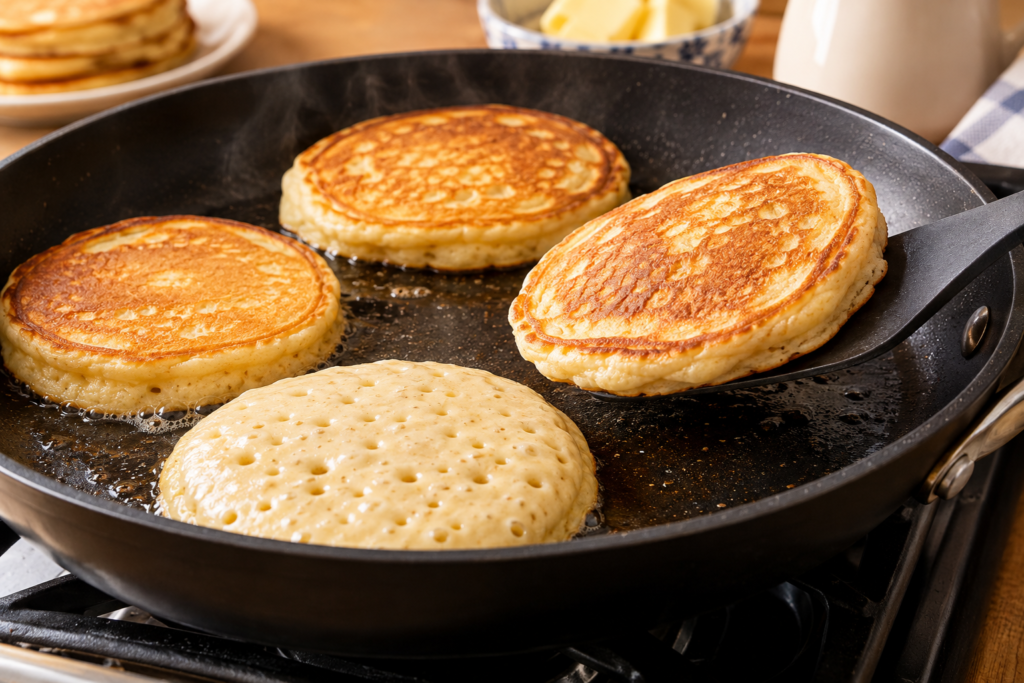
Avoid repeatedly pressing down on the pancakes with the spatula. Pressing them releases some of the air that gives them their fluffy texture.
7. Serve Immediately
Transfer the finished pancakes to a plate and continue cooking the remaining batter.
For the best texture, serve the pancakes while they are warm and freshly cooked.
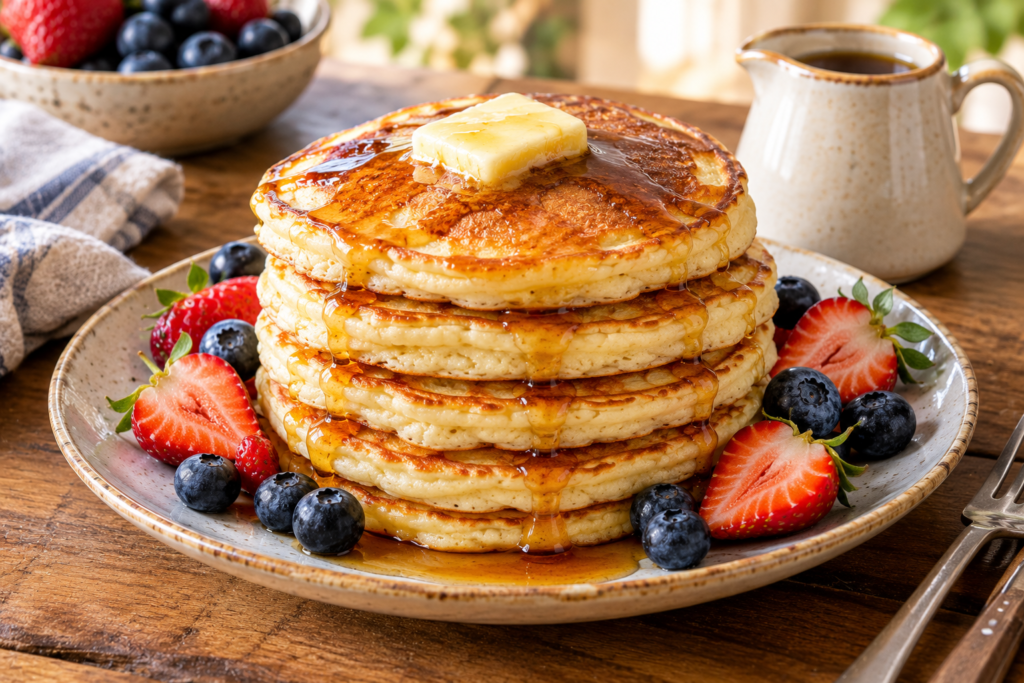
Add a small pat of butter and drizzle generously with maple syrup.
The Best Temperature for Cooking Pancakes
Getting the skillet temperature right is one of the easiest ways to improve homemade pancakes.
If the pan is too hot, the pancakes can become dark or burnt on the outside while remaining undercooked in the middle.
If the pan is too cool, the pancakes may spread too much and take a long time to develop a golden crust.
A steady medium heat is generally the best starting point. Because every stove and skillet behaves differently, we should adjust the temperature as necessary.
The first pancake can be treated as a test. If it becomes dark too quickly, reduce the heat. If it remains pale and takes too long to cook, increase the heat slightly.
How to Get Extra-Thick, Fluffy Pancakes
For particularly thick pancakes, we should focus on batter consistency and gentle handling.
The batter should be thick enough to slowly spread when poured onto the skillet. If it runs across the pan like a thin liquid, it may contain too much moisture.
However, we should not compensate by adding large amounts of flour. A small amount of thickness is desirable, but an excessively thick batter can produce dense pancakes.
Most importantly, we should avoid flattening the pancakes while they cook. Their height comes from the air bubbles created by the leavening ingredients.
Common Mistakes That Make Pancakes Dense
Overmixing the Batter
This is one of the most common problems. Mixing too aggressively develops gluten and can result in tough, chewy pancakes.
We only need to mix until the ingredients are combined.
Using Old Baking Powder or Baking Soda
Leavening agents lose effectiveness over time. If they are too old, the pancakes may not rise properly.
Fresh ingredients help us achieve a lighter texture.
Cooking at Excessively High Heat
High heat does not make pancakes cook faster in a useful way. Instead, it can burn the exterior before the center is ready.
Medium heat gives the pancakes enough time to rise and cook evenly.
Pressing the Pancakes
Once flipped, we should leave the pancakes alone. Pressing them down with a spatula can force out the air that makes them fluffy.
Adding Too Much Flour
Adding extra flour because the batter looks slightly lumpy can create dense pancakes. Small lumps are normal and desirable.
How to Know When a Pancake Is Ready to Flip
We should look for several visual signs rather than relying only on cooking time.
A pancake is generally ready to flip when:
- Bubbles appear across the surface.
- The bubbles begin to pop and remain open.
- The edges look slightly dry and set.
- The underside is golden brown.
- The batter no longer looks completely wet around the edges.
Once flipped, the second side usually cooks faster than the first.
Delicious Toppings for Buttermilk Pancakes
Classic pancakes are excellent with butter and maple syrup, but there are plenty of ways to customize them.
For a fresh breakfast, add blueberries, strawberries, bananas, or raspberries.
For a richer option, serve them with whipped cream and chocolate chips.
For extra crunch, sprinkle toasted pecans, walnuts, or almonds over the stack.
We can also add a dusting of powdered sugar or a spoonful of fruit compote.
Flavor Variations
The basic recipe is easy to customize.
Blueberry Buttermilk Pancakes: Fold fresh or frozen blueberries gently into the batter.
Chocolate Chip Pancakes: Add a small handful of chocolate chips immediately after pouring each pancake onto the skillet.
Cinnamon Pancakes: Add approximately ½ teaspoon of ground cinnamon to the dry ingredients.
Banana Pancakes: Mash one ripe banana and gently incorporate it into the wet ingredients.
Lemon Pancakes: Add finely grated lemon zest to the batter and serve with fresh berries.
How to Keep Pancakes Warm
If we are preparing a large batch, the finished pancakes can be kept warm while the remaining batter cooks.
Place the cooked pancakes on a baking sheet in a low-temperature oven, ideally around 200°F (95°C). Avoid stacking too many pancakes tightly because trapped steam can make them lose their lightly crisp edges.
For the best texture, however, pancakes are always at their peak when served shortly after cooking.
Can We Freeze Buttermilk Pancakes?
Yes. Homemade pancakes freeze very well.
Allow the pancakes to cool completely, then place parchment or wax paper between individual pancakes. Transfer them to an airtight freezer-safe bag or container.
They can be reheated directly from frozen in a toaster, toaster oven, microwave, or skillet.
For the best texture, a toaster or skillet usually gives better results than microwaving because it helps restore some of the exterior texture.
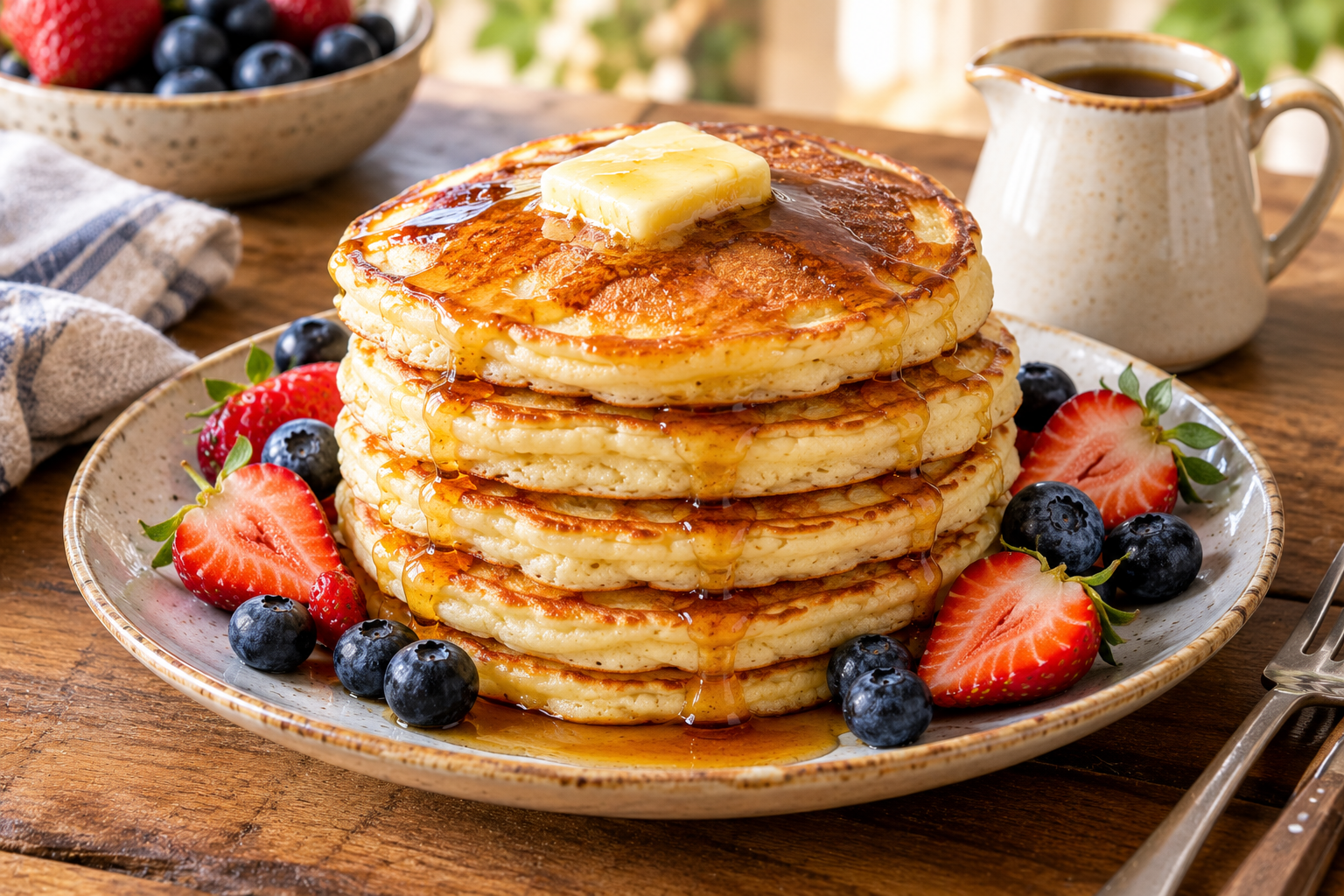
Fluffy Buttermilk Pancakes
Ingredients
Method
- In a large bowl, whisk together the flour, sugar, baking powder, baking soda, and salt.
- In another bowl, whisk together the eggs, buttermilk, melted butter, and vanilla.
- Pour the wet ingredients into the dry ingredients.
- Gently stir until just combined. Do not overmix; a few lumps are perfectly fine.
- Let the batter rest for 5–10 minutes.
- Heat a nonstick skillet or griddle over medium heat and lightly grease it.
- Pour approximately ¼ cup of batter onto the skillet for each pancake.
- Cook for about 2–3 minutes, until bubbles form and the edges look set.
- Flip and cook for another 1–2 minutes, until golden brown and cooked through.
- Repeat with the remaining batter.
- Serve warm with butter, maple syrup, fresh fruit, or your favorite toppings.
Notes
- Do not overmix the batter.
- Use medium heat for even browning.
- The first pancake can be used to test the skillet temperature.
- Small lumps in the batter are completely normal.
- For the fluffiest results, cook the batter soon after mixing.
- Keep cooked pancakes warm in a low oven if serving a large batch.
Frequently Asked Questions
Can we make pancake batter the night before?
We get the best results when the batter is cooked relatively soon after preparation because the leavening agents are most effective while fresh. For convenience, we can prepare the dry and wet ingredients separately the night before and combine them shortly before cooking.
Why are my buttermilk pancakes not fluffy?
Dense pancakes are commonly caused by overmixing, expired leavening agents, overly thin batter, or excessive heat. Gentle mixing and fresh baking powder and baking soda are especially important.
Should we use butter or oil in the pan?
Both work well. Butter provides excellent flavor and helps with browning, while neutral oil has a higher smoke point and can make temperature control easier. A small combination of both is also an excellent option.
Can we use whole wheat flour?
Yes, but the texture will be heavier than pancakes made entirely with all-purpose flour. For a lighter result, we can replace only part of the all-purpose flour with whole wheat flour.
Why do buttermilk pancakes taste slightly tangy?
The natural acidity of buttermilk gives the pancakes their characteristic mild tangy flavor. This balances the sweetness of the sugar and maple syrup beautifully.
The Secret to Perfect Homemade Buttermilk Pancakes
Great pancakes do not require complicated ingredients or professional cooking equipment. The key is simply to respect the batter.
Use fresh leavening agents, measure the flour carefully, combine the ingredients gently, and give the batter a short rest. Then cook the pancakes over steady medium heat without pressing them down.
When we follow these simple steps, the result is a stack of golden, fluffy buttermilk pancakes with tender centers and lightly crisp edges.
Serve them warm with butter and maple syrup for the classic breakfast experience, or customize the stack with fresh berries, bananas, chocolate chips, nuts, or whipped cream.
Once this recipe becomes part of our breakfast routine, there is little reason to rely on boxed pancake mix again. These fluffy buttermilk pancakes are simple, reliable, and delicious enough to become the only pancake recipe we need.
Check out: Loaded Vegetarian Nachos: Ultimate Game-Day Recipe
Get Access Now: Recipes
ProToGrow Chocobanana Pancake Mix: Click Here