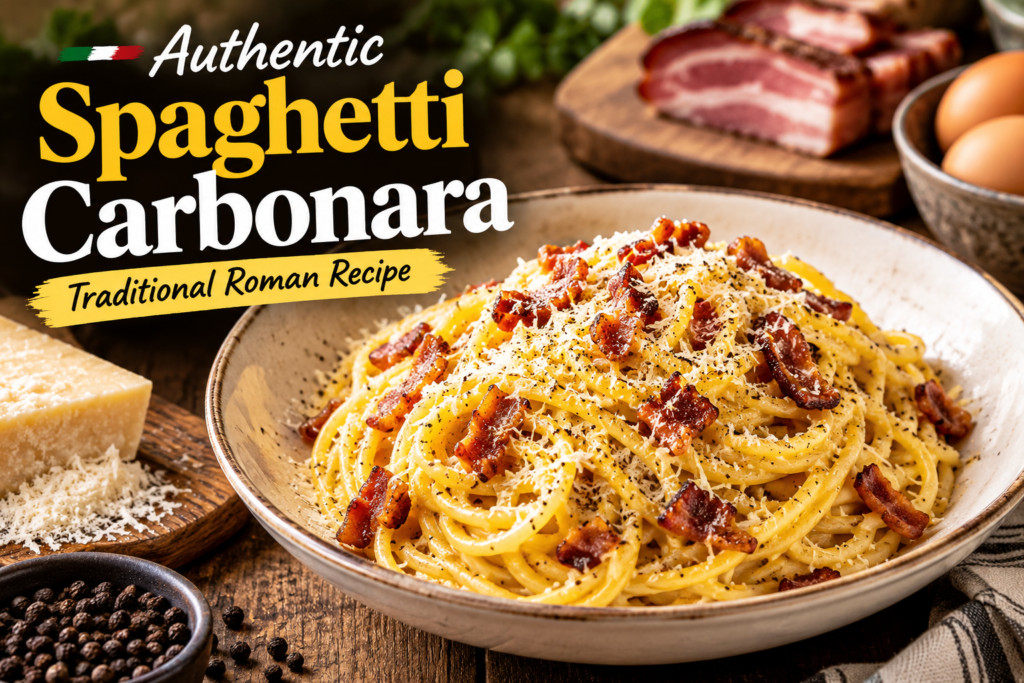
Authentic Spaghetti Carbonara is one of the most famous dishes from Rome and one of the simplest examples of Italian cooking at its best. Made with just a handful of ingredients—spaghetti, guanciale, Pecorino Romano, eggs, and freshly ground black pepper—traditional Roman carbonara does not need cream, butter, garlic, or onions to become rich and delicious.
The secret is not a long ingredient list. It is the technique. When the salty, crisp guanciale meets perfectly cooked pasta, a silky egg-and-cheese mixture, and starchy pasta water, everything comes together into a naturally creamy sauce without using cream.
This traditional Roman spaghetti carbonara recipe gives us a rich, glossy, savory pasta with crisp pieces of guanciale in every bite. Once the technique is understood, it becomes an easy weeknight dinner that can be prepared in roughly 20–25 minutes.
Table of Contents
What Is Traditional Spaghetti Carbonara?
Spaghetti Carbonara is a classic pasta dish associated with Rome and the Lazio region of Italy. Traditional carbonara is built around a few essential ingredients rather than a complicated sauce.
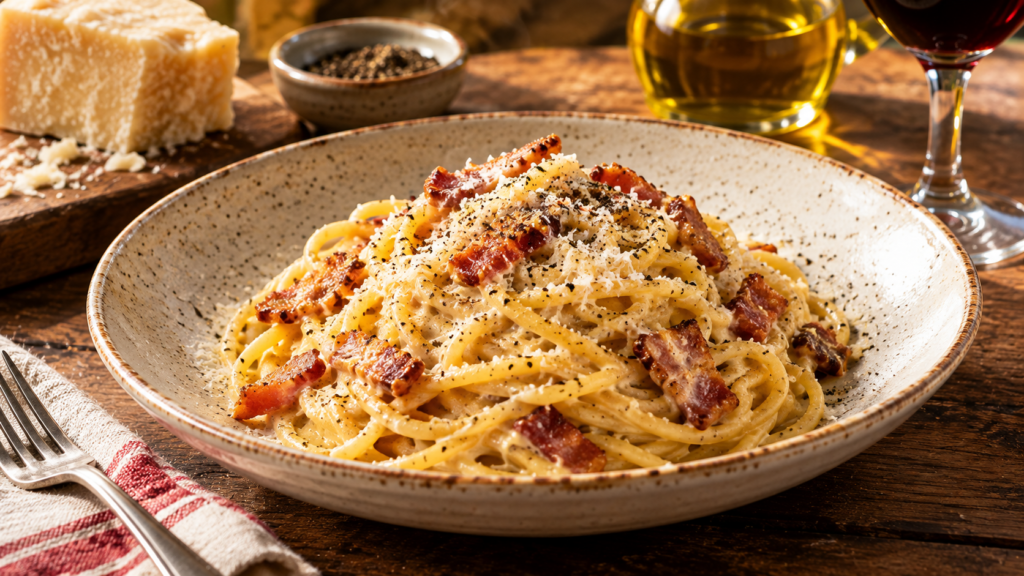
The creamy texture comes from egg yolks, Pecorino Romano, and pasta water, not from heavy cream. The guanciale provides rendered pork fat and a deep savory flavor, while black pepper adds warmth and balances the richness of the cheese and eggs.
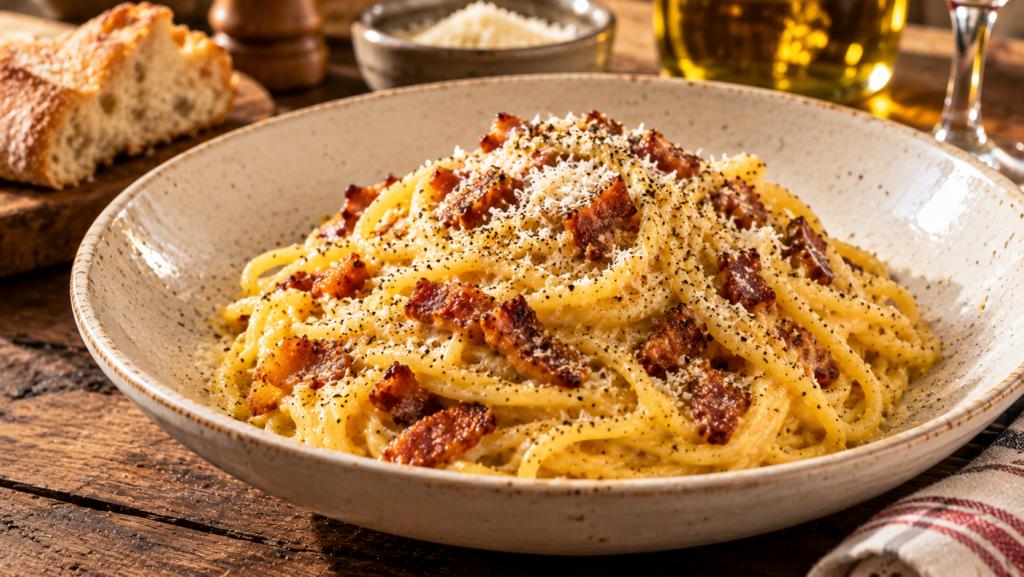
A proper carbonara should be silky, glossy, and creamy without being liquid or heavy. The sauce should cling naturally to the spaghetti rather than sit at the bottom of the plate.
Authentic Carbonara Ingredients
For approximately 4 servings, we use:
- 400 g spaghetti
- 150 g guanciale, cut into small strips or cubes
- 4 large egg yolks
- 1 whole egg
- 100 g finely grated Pecorino Romano cheese
- Freshly ground black pepper, generously to taste
- Salt, for the pasta water
Guanciale
Guanciale is traditionally made from cured pork jowl or cheek. It contains enough fat to render beautifully in the pan while developing crisp, intensely flavorful pieces.
For the most authentic Roman carbonara, guanciale is the preferred choice. Pancetta can be used when guanciale is unavailable, but it produces a somewhat different flavor and texture.
Pecorino Romano
Pecorino Romano is the traditional cheese used in Roman carbonara. It has a distinctive salty, sharp, sheep’s-milk flavor that gives the finished sauce its characteristic taste.
Freshly grate the cheese rather than using pre-grated cheese whenever possible. Finely grated Pecorino melts more evenly and combines more smoothly with the eggs.
Eggs
The combination of egg yolks and a whole egg creates a sauce that is rich while still having enough structure to coat the pasta.
The exact ratio can be adjusted according to preference, but using plenty of yolk gives carbonara its luxurious texture.
Black Pepper
Freshly cracked black pepper is an essential part of the dish. Its spicy, aromatic character cuts through the richness of the pork, cheese, and eggs.
For the best flavor, crack the pepper immediately before cooking.
How to Make Authentic Spaghetti Carbonara
1. Prepare the Guanciale
Cut the guanciale into small strips or bite-sized pieces.
Place it in a cold, dry skillet and turn the heat to medium-low. Starting the guanciale in a cold pan allows the fat to render gradually.
Cook until the fat has rendered and the guanciale becomes golden brown and crisp around the edges. The rendered fat will become an important part of the carbonara sauce.
Turn off the heat once the guanciale reaches the desired crispness, but keep the rendered fat in the pan.
2. Make the Carbonara Egg Mixture
While the guanciale cooks, combine the egg yolks, whole egg, and finely grated Pecorino Romano in a bowl.
Add a generous amount of freshly cracked black pepper.
Mix thoroughly until you have a thick, smooth mixture. It should resemble a thick cheese-and-egg paste rather than a thin liquid.
Do not add hot guanciale fat directly to the eggs at this stage because excessive heat can cause the eggs to scramble.
3. Cook the Spaghetti
Bring a large pot of water to a boil and season it with salt.
Add the spaghetti and cook until al dente, following the package instructions while checking the pasta a minute or two before the suggested cooking time.
Before draining, reserve at least 1 cup of pasta water.
This starchy water is one of the most important ingredients in carbonara because it helps loosen the cheese and egg mixture while creating a smooth, emulsified sauce.
4. Combine the Pasta and Guanciale
Transfer the hot, drained spaghetti to the skillet containing the rendered guanciale fat.
Toss thoroughly so the pasta becomes coated with the flavorful pork fat.
If the pan is extremely hot, allow it to cool for a short moment. The goal is to use the residual heat of the pasta and pan—not direct high heat—to cook the egg mixture gently.
5. Add the Egg and Cheese Mixture
Add the egg and Pecorino mixture to the hot spaghetti.
Immediately toss the pasta continuously.
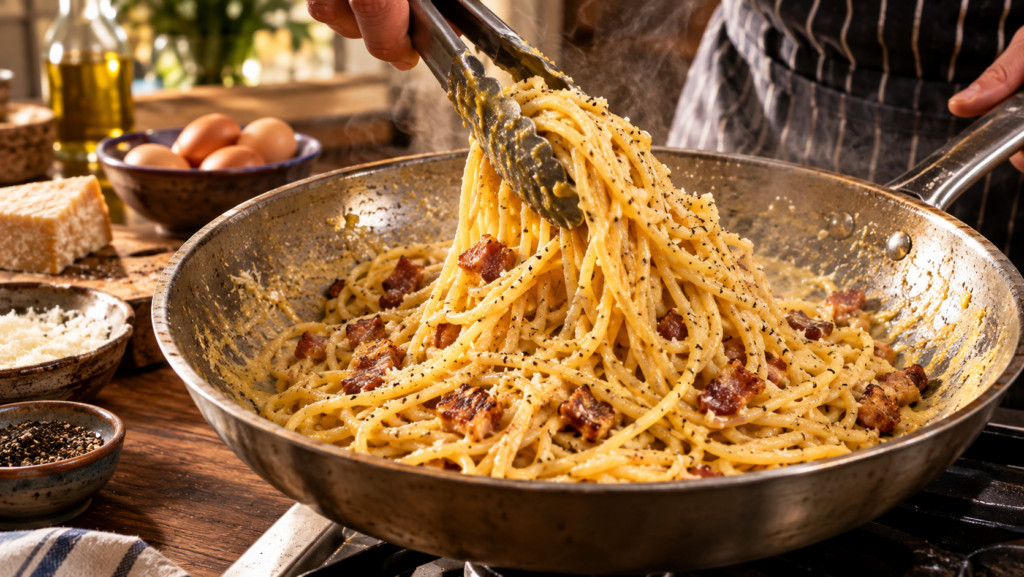
Add a small splash of reserved pasta water and keep tossing. Continue adding pasta water a little at a time until the sauce becomes smooth, glossy, and creamy.
The heat from the pasta gently cooks the eggs while the starch from the pasta water helps emulsify the rendered pork fat, eggs, and cheese.
This is the crucial stage of making authentic carbonara.
6. Add the Crispy Guanciale
Add most of the crispy guanciale and toss everything together.
Reserve a few pieces for the top of each serving. This gives the finished pasta a combination of creamy sauce and crunchy, savory pork in every portion.
7. Serve Immediately
Divide the spaghetti among warm plates.
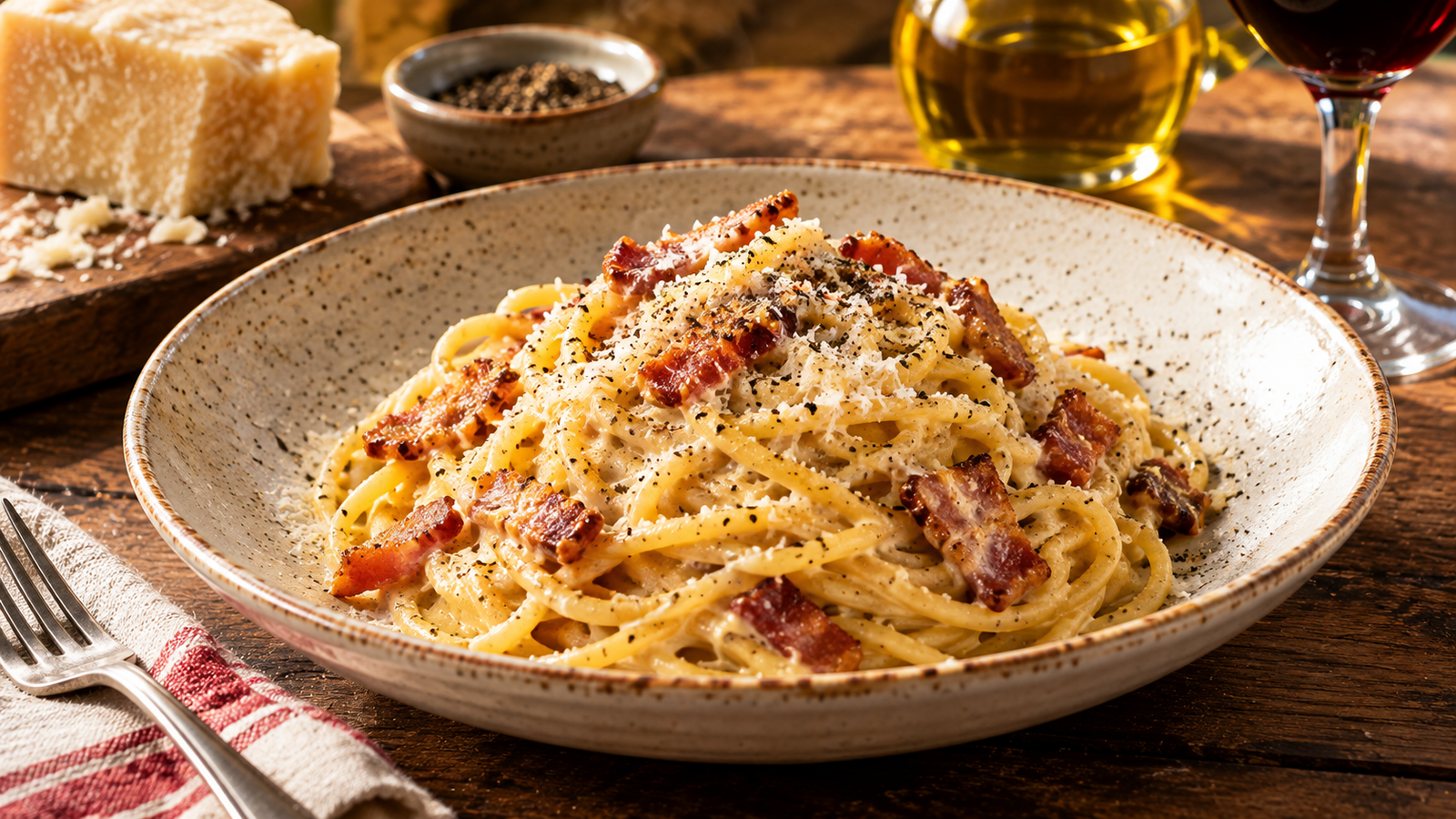
Finish with additional grated Pecorino Romano and freshly cracked black pepper. Add the remaining crispy guanciale on top.
Serve immediately while the sauce is at its silkiest.
How to Make Carbonara Creamy Without Cream
One of the biggest misconceptions about traditional carbonara is that cream is necessary to create its creamy texture.
It is not.
The characteristic creaminess comes from an emulsion of egg, cheese, rendered guanciale fat, and starchy pasta water.
When the ingredients are combined correctly, the sauce coats every strand of spaghetti and creates a glossy appearance. The pasta water is especially important because its starch helps bind the ingredients together.
The key is to avoid overheating the eggs. Too much direct heat will turn the egg mixture into scrambled eggs instead of a smooth sauce.
Common Spaghetti Carbonara Mistakes
Using Heavy Cream
Traditional Roman carbonara does not require heavy cream. Adding cream changes the character of the dish and makes the sauce heavier.
Cooking the Eggs Directly Over High Heat
This is one of the easiest ways to ruin carbonara. The eggs should gently cook from the residual heat of the pasta rather than being fried in a hot pan.
Forgetting to Reserve Pasta Water
Never drain all the pasta water before making carbonara. The starchy water helps create the smooth sauce and allows us to control its consistency.
Using Too Much Salt
Guanciale and Pecorino Romano are both naturally salty. Season the pasta water carefully and taste the finished dish before adding additional salt.
Using Low-Quality Cheese
Freshly grated Pecorino Romano provides significantly better flavor and texture than a generic powdered cheese.
Letting the Pasta Sit Too Long
Carbonara is best served immediately. As it cools, the cheese and egg mixture becomes thicker, so the dish is at its best straight from the pan.
Tips for Perfect Authentic Carbonara
Use finely grated Pecorino Romano. A fine grate allows the cheese to incorporate smoothly into the egg mixture.
Reserve plenty of pasta water. It is better to have extra than to run out while adjusting the sauce.
Keep the heat under control. Carbonara requires gentle residual heat rather than aggressive cooking.
Toss continuously. Constant movement helps distribute the sauce evenly and prevents the eggs from setting in one place.
Use freshly cracked pepper. Fresh pepper provides a much more aromatic flavor than pre-ground pepper.
Serve immediately. The texture changes quickly as carbonara cools.
Can We Use Pancetta Instead of Guanciale?
Yes, if guanciale is difficult to find. Pancetta is a practical substitute and will still produce a delicious pasta dish.
However, guanciale provides the most traditional Roman flavor because its higher fat content renders into a rich, intensely savory sauce.
Bacon can also be used in an emergency, but smoked bacon introduces a smoky flavor that is not characteristic of traditional Roman carbonara.
Can We Use Parmesan Instead of Pecorino Romano?
Parmesan can work as a substitute, but Pecorino Romano is the traditional Roman choice.
Pecorino Romano is sharper and saltier, giving carbonara its distinctive savory character. If using Parmesan, the final dish will have a milder, nuttier flavor.
Some cooks combine Pecorino Romano and Parmesan for a slightly softer flavor, but a classic Roman-style version is best made primarily with Pecorino Romano.
What to Serve With Spaghetti Carbonara?
Carbonara is already rich and satisfying, so simple accompaniments work best.
A crisp green salad dressed with a light vinaigrette provides freshness and acidity. Steamed or roasted vegetables can also balance the richness of the pasta.
For an authentic Italian-style meal, keep the side dishes uncomplicated and let the carbonara remain the centerpiece.
How to Store and Reheat Carbonara?
Carbonara is best eaten immediately, and its texture is noticeably better when freshly prepared.
If leftovers remain, store them in an airtight container in the refrigerator and consume them promptly.
Reheating can cause the eggs and cheese to become firm, so use gentle heat and add a small splash of water while tossing. Avoid overheating because the sauce can become dry or scrambled.
For the best results, however, prepare only the amount needed and enjoy carbonara fresh.
Authentic Spaghetti Carbonara Recipe
Ingredients
Method
- Cut the guanciale into small pieces.
- Place it in a cold skillet and cook over medium-low heat until the fat renders and the meat becomes crisp.
- Whisk the egg yolks, whole egg, Pecorino Romano, and black pepper in a bowl.
- Cook spaghetti in salted boiling water until al dente.
- Reserve at least 1 cup of pasta water before draining.
- Toss the hot spaghetti with the rendered guanciale fat.
- Remove the pan from direct heat and add the egg-and-cheese mixture.
- Toss continuously while adding pasta water gradually until the sauce becomes glossy and creamy.
- Add the crispy guanciale and toss again.
- Serve immediately with extra Pecorino Romano and freshly cracked black pepper.
Notes
The Secret to Truly Authentic Roman Carbonara
The beauty of authentic Spaghetti Carbonara lies in its simplicity. There is no cream-based sauce to prepare and no complicated cooking process. The dish depends on using good ingredients and controlling heat carefully. The combination of crispy guanciale, salty Pecorino Romano, rich eggs, peppery seasoning, and starchy spaghetti water creates a sauce that is remarkably creamy without being heavy. Once the technique becomes familiar, carbonara can become one of the fastest and most satisfying pasta dinners to make at home. Keep the ingredients traditional, cook the spaghetti al dente, control the heat, and toss generously. The result should be a plate of glossy spaghetti coated in a rich, silky Roman-style sauce with crisp guanciale throughout. Simple ingredients. Proper technique. Authentic Roman flavor.Frequently Asked Questions
Does authentic carbonara contain cream?
No. Traditional Roman carbonara gets its creamy texture from eggs, Pecorino Romano, rendered guanciale fat, and starchy pasta water.
What cheese is used in authentic carbonara?
Pecorino Romano is the traditional cheese associated with Roman carbonara.
Is guanciale necessary for carbonara?
Guanciale is the traditional choice. Pancetta can be substituted when necessary, although the flavor and texture will be somewhat different.
Why did my carbonara turn into scrambled eggs?
The pan was likely too hot, or the eggs were exposed to direct heat for too long. Remove the pasta from high heat before adding the egg mixture and toss continuously.
Why is my carbonara too thick?
Add a little reserved pasta water and toss vigorously. Add the water gradually until the sauce reaches a smooth, glossy consistency.
Why is my carbonara watery?
Too much pasta water may have been added. Continue tossing over gentle residual heat, allowing the sauce to emulsify and thicken. Add cheese if necessary.
Check out: Chicken Souvlaki With Homemade Tzatziki
Get Access Now: Recipes
A Cookbook of Traditional Italian Recipes: Click Here